
Underwater Breathing: New Tech Trials Extended Human Submersion
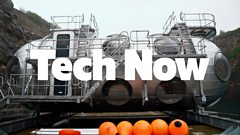
Revolutionary Underwater Breathing Technology Transforms Deep-Sea Exploration
Pioneering underwater breathing technology is reshaping the landscape of aquatic research and human exploration beneath the waves. Andrew Rogers, a leading innovator in marine technology, has launched comprehensive trials designed to extend the duration humans can safely remain submerged, opening unprecedented opportunities for scientific discovery and underwater engineering applications.
Understanding the Breakthrough in Underwater Breathing Systems
The innovative underwater breathing apparatus represents a significant leap forward in submersion technology. Rather than relying solely on traditional scuba equipment, this advanced system employs novel oxygen extraction and delivery mechanisms that substantially prolong the time divers can spend at depth. The technology operates by optimizing gas exchange processes, allowing users to remain underwater for extended periods while maintaining safety standards and physiological stability.
Andrew Rogers' Vision for Submersion Time Extension
Andrew Rogers has dedicated years to developing solutions that address the fundamental limitations of conventional diving equipment. His research team has engineered systems capable of managing the complex challenges associated with prolonged underwater breathing, including pressure regulation, oxygen decompression, and metabolic demands on the human body. Through rigorous testing and iterative refinement, Rogers has created equipment that extends submersion capabilities far beyond what traditional methods permit.
Implications for Deep-Sea Exploration Innovations
The advancement of underwater breathing technology holds transformative potential for multiple sectors. Marine biologists can conduct more extensive field research on deep-sea ecosystems without artificial time constraints. Underwater construction and maintenance operations benefit from extended worker submersion, improving efficiency and reducing operational costs. Additionally, archaeological teams exploring submerged historical sites gain unprecedented access to previously unreachable areas, fundamentally changing underwater exploration methodologies.
Current Trial Results and Performance Metrics
Preliminary data from ongoing trials demonstrates remarkable success rates. Test subjects utilizing the new underwater breathing systems have achieved submersion durations significantly exceeding conventional equipment limitations. The trials maintain rigorous safety protocols while systematically pushing the boundaries of human underwater endurance. Each testing phase generates valuable data informing equipment refinements and operational procedures.
Safety Considerations and Regulatory Framework
While extending submersion capabilities, Rogers and his team prioritize comprehensive safety evaluation. All underwater breathing technology trials operate under strict medical supervision and environmental monitoring. Researchers continuously assess physiological responses, equipment reliability, and emergency protocols to ensure participant wellbeing. Regulatory compliance remains paramount, with trials designed to meet international diving safety standards and certification requirements.
Future Applications and Industry Impact
The successful development of extended underwater breathing systems promises substantial industry transformation. Commercial diving operations, scientific research institutions, and military applications will likely adopt these technologies once trials conclude and certification processes complete. The submersion time extension achieved through this innovation could revolutionize deep-sea industries, enabling previously impossible missions and discoveries beneath the ocean surface.
Broader Implications for Human Underwater Endurance
Beyond immediate practical applications, these breakthroughs in underwater breathing technology symbolize humanity's ongoing quest to transcend natural limitations. As submersion capabilities expand through technological innovation, new questions emerge regarding sustainable underwater habitation, extreme-depth operations, and the biological limits of human adaptation. Rogers' work positions future researchers to address these complex challenges with increasingly sophisticated equipment and methodologies.


