
Trump Scales Back Military Drills with South Korea Following Iran Conflict
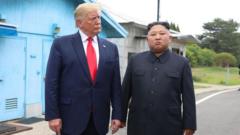
Trump Announces Significant Reduction in Military Drills
President Donald Trump has declared that the United States will substantially reduce the scale of military drills conducted alongside South Korea, marking a notable shift in defense strategy for the Korean peninsula. The decision to downsize these exercises comes in the aftermath of recent tensions involving Iran, prompting a comprehensive review of America's military commitments across multiple regions. Trump military drills South Korea represents a fundamental change in how the administration approaches joint defense operations in East Asia.
The announcement reflects broader strategic considerations regarding resource allocation and diplomatic priorities. Rather than maintaining the established tempo of large-scale joint operations, the administration has determined that a more measured approach aligns better with current geopolitical circumstances. This modification demonstrates the complex interplay between military preparedness and diplomatic engagement in the region.
Trump's Justification for the Strategic Shift
In explaining the rationale behind this significant decision, Trump emphasized his "very good relationship" with North Korea's leader as a primary factor influencing the choice to downsize the exercises. The president has consistently highlighted the importance of maintaining diplomatic channels with Pyongyang, viewing these connections as instrumental in promoting stability on the Korean peninsula. According to Trump, the strong personal rapport he has cultivated creates an environment where traditional military posturing may be less necessary than previously assumed.
The Trump North Korea relationship has become increasingly central to administration policy regarding the Korean peninsula. Officials within the White House have contended that demonstrating restraint in military activities signals goodwill and commitment to diplomatic solutions. This approach diverges from decades of established defense protocols that emphasized the necessity of large-scale joint exercises as deterrents against potential aggression.
Impact on US South Korea Exercises Reduction
The decision to reduce joint military exercises carries significant implications for South Korea, America's principal ally in Northeast Asia. Seoul has historically valued these collaborative drills as essential components of its defense architecture, providing reassurance regarding American commitment to the peninsula's security. The scaling back of these operations necessitates careful coordination between Washington and Seoul to ensure continued interoperability and readiness.
Military experts have expressed varied perspectives on the implications of this policy shift. Proponents argue that reducing exercise tempo could lower tensions and create diplomatic space for meaningful negotiations with North Korea. Conversely, skeptics warn that diminishing the frequency and scale of military drills might undermine deterrence capabilities and signal weakness to adversaries who may interpret restraint as a lack of resolve.
Regional Security Considerations
The Korean peninsula remains one of the world's most sensitive geopolitical flashpoints, where military readiness directly influences stability calculations. For decades, joint US-South Korean military exercises have served as visible demonstrations of alliance commitment and collective defense capability. These operations, including the major Freedom Shield drills, have represented substantial investments in coordinated training and operational planning.
Trump's decision to modify this established pattern reflects his administration's distinctive approach to foreign policy, which frequently prioritizes direct engagement and personal relationships over institutional structures and traditional frameworks. The president has repeatedly suggested that personal diplomacy with North Korean leadership can achieve objectives that conventional military deterrence cannot accomplish.
Broader Strategic Context
The announcement occurs against the backdrop of renewed tensions in the Middle East, where Iran has emerged as a focal point of American security concerns. The administration's decision to redirect attention and resources from Korean peninsula exercises to address Iranian developments illustrates shifting priorities within military planning. This recalibration suggests that policymakers view the Iranian theater as requiring more immediate and substantial commitment than maintaining traditional East Asian operational tempos.
The timing and justification for military exercises scaling back have generated substantial discussion within defense and diplomatic circles. Administration officials have characterized the move as reflecting confidence in current Korean peninsula dynamics and Trump's belief that diplomatic channels with North Korea remain productive. However, this perspective represents a departure from longstanding bipartisan consensus regarding the necessity of visible military readiness in the region.
Looking Forward
As this policy takes effect, both American and South Korean military planners must develop new operational paradigms that accommodate reduced exercise frequencies while maintaining necessary readiness levels. The modification of these joint exercises will require ongoing coordination between defense establishments to ensure that critical capabilities remain functional despite reduced training opportunities. The long-term implications of this strategic shift will become increasingly apparent as implementation proceeds and regional dynamics evolve.


