
Former Olympic Athlete Arrested Over Washington Reflecting Pool Vandalism Claims
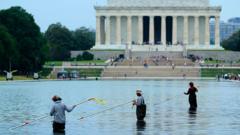
Former Olympian Faces Allegations Regarding Washington Reflecting Pool Vandalism
A former competitor who participated in Olympic Games has firmly rejected accusations of being responsible for Washington Reflecting Pool vandalism. Following his detention by authorities, the athlete has maintained that his actions were entirely innocent and misunderstood by investigators examining the incident at this iconic national landmark.
The Washington Reflecting Pool, one of the most visited monuments in the nation's capital, has been at the center of recent scrutiny regarding preservation and public safety. The former Olympian's arrest has drawn attention to how authorities investigate potential damage to these significant cultural sites, sparking broader conversations about the handling of such cases.
Details of the Alleged Incident
According to statements provided by the accused individual, his presence at the location was driven purely by inquisitiveness. He explained that he was examining newly applied paint that had recently been applied to surfaces within the Washington Reflecting Pool area. The athlete consistently denies that he removed, altered, or damaged any of this fresh paint application.
Authorities appear to have interpreted his physical contact with the painted surfaces differently, leading to the arrest. However, the former Olympian's account suggests that his interactions with the site were tactile exploration rather than deliberate destruction. This distinction has become central to his defense, as he seeks to clarify the nature of his conduct during the encounter.
Understanding the Washington Reflecting Pool Context
The Washington Reflecting Pool serves as a backdrop for some of America's most important monuments and commemorative spaces. Maintenance teams regularly conduct work on various elements of the site, including protective coatings and protective measures. The recent paint application mentioned in this case appears to have been part of routine preservation efforts at the location.
Preservation of such nationally significant sites requires strict protocols regarding public access and interaction with work-in-progress areas. When maintenance activities occur, authorities implement clear guidelines to prevent accidental damage or contamination. Understanding these protocols helps contextualize why authorities may have taken enforcement action based on the alleged conduct.
The Athlete's Perspective on the Charges
Throughout the investigation process, the former Olympic competitor has maintained consistent statements about his intentions. His position centers on the argument that curiosity and tactile examination do not constitute vandalism. He suggests that investigators may have misinterpreted innocent behavior as intentional property damage related to the Washington Reflecting Pool vandalism allegations.
This type of misunderstanding between public behavior and official interpretation raises important questions about how enforcement decisions are made at major public sites. The former Olympian's case exemplifies situations where distinctions between exploration and destruction become subject to interpretation and investigation protocols.
Legal and Public Implications
The case involving the former Olympian and Washington Reflecting Pool vandalism charges carries implications for how similar incidents may be handled in the future. Questions have emerged regarding whether adequate warnings exist about maintenance areas, whether visitors receive sufficient guidance about appropriate interaction with recently treated surfaces, and how authorities differentiate between accidental contact and intentional damage.
Monument preservation presents ongoing challenges for facility managers balancing public access with protection requirements. Recent incidents, including this Washington Reflecting Pool incident, highlight the complexities involved in maintaining these spaces while allowing public engagement and visitation.
The Broader Context of Monument Preservation
National monuments and public spaces face constant demands for maintenance, restoration, and protection. The Washington Reflecting Pool, like many similar sites, undergoes regular treatment and care procedures. These necessary maintenance activities sometimes create situations where public access intersects with preservation work, as evidenced by this recent incident.
Facilities managers must develop clear communication strategies to inform visitors about ongoing work and appropriate conduct near treatment areas. The former Olympic athlete's case may serve as an example of what can occur when such communication gaps exist or when assumptions about intentional conduct prove incorrect.
Moving Forward
As this matter progresses through appropriate legal channels, the focus remains on determining whether the former Olympian's conduct constituted actual vandalism or represented innocent curiosity. His denial regarding the Washington Reflecting Pool vandalism allegations suggests that factual clarity will be essential in resolving the dispute. The outcome of this case may influence how authorities approach similar situations at protected sites throughout Washington, DC and beyond.


