
Iran Claims Closure of Strait of Hormuz Following Israel's Lebanon Offensive
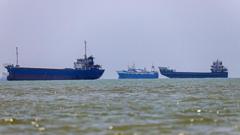
Iran Announces Strait of Hormuz Blockade Over Israeli Military Operations
Tehran has declared that the Strait of Hormuz is now closed in response to recent Israeli military operations targeting Lebanon. The Strait of Hormuz closure represents a significant escalation in regional tensions, with Iran citing the ongoing conflict as justification for this extraordinary action. However, the United States military establishment has quickly challenged the validity of Iran's announcement, questioning both the feasibility and the actual implementation of such a blockade.
US Military Response to Iran's Claims
American military officials have expressed skepticism regarding Tehran's assertion about the Strait of Hormuz. The disputed claim comes at a particularly sensitive moment, as international diplomatic efforts attempt to de-escalate mounting tensions in the Eastern Mediterranean and Persian Gulf regions. The timing of Iran's announcement, combined with its strategic nature, has raised questions about the credibility and actual enforcement of the proposed closure.
Strategic Importance of the Strait of Hormuz
The Strait of Hormuz remains one of the world's most critical maritime chokepoints, serving as the passage for roughly one-third of global seaborne oil trade. Any actual closure or significant disruption would have far-reaching consequences for international energy markets and global commerce. The potential impact on global oil prices and shipping routes makes Iran's claim particularly consequential, even if disputed by Western military analysts.
The Lebanon Dimension
Israel's military operations targeting Lebanon have intensified regional instability over recent weeks. These attacks have prompted varying responses from neighboring states and international actors. Iran's declaration regarding the Strait of Hormuz closure appears to be framed as a direct response to these Israeli military actions, positioning Tehran as a defender of regional interests against what it characterizes as Israeli aggression.
Diplomatic Talks Set for Switzerland
The announcement arrives just days before scheduled US-Iran negotiations planned for Switzerland on Sunday. These diplomatic discussions had been anticipated as a potential opportunity for de-escalation and dialogue between the two nations. However, Iran's bold declaration regarding the Strait of Hormuz may significantly complicate these talks, potentially hardening positions on both sides ahead of the scheduled meetings.
International Community Perspective
Global observers and analysts are closely monitoring developments regarding the Strait of Hormuz and Iran's military posturing. Several nations with significant maritime interests in the region have expressed concern about potential disruptions to shipping and commerce. The international community remains divided on how to interpret Iran's claims and what practical measures might follow such an announcement.
Military Capabilities and Implementation Challenges
Experts question Iran's actual capability to enforce a complete blockade of the Strait of Hormuz. The waterway is heavily patrolled by international naval forces, and any attempt at closure would likely face immediate resistance from multiple maritime powers. This technical reality has fueled skepticism about whether Iran possesses the military capacity to implement its stated position regarding the Strait of Hormuz.
Implications for Regional Stability
The escalating rhetoric and military posturing between regional powers threatens to further destabilize an already volatile area. The situation underscores the interconnected nature of Middle Eastern conflicts, where events in one location quickly influence tensions across multiple nations. As diplomatic efforts continue, both Iran and its adversaries face pressure to demonstrate restraint while maintaining their respective strategic positions in the region.


