
Asian Tech Stocks Plunge as Markets Face Volatility Crisis
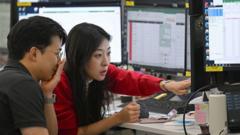
Asian Stock Markets Decline Sharply Amid Technology Sector Weakness
Asian stock markets are experiencing substantial losses as technology stocks face mounting pressure across the region. The decline reflects broader concerns about valuations and economic growth in the technology sector, prompting significant portfolio adjustments among investors throughout Asia's major financial centers.
South Korea's Kospi Index Faces Multiple Trading Halts
Trading activity on South Korea's Kospi index was suspended for the third consecutive occasion within the same week as authorities moved to implement circuit breaker mechanisms. These automatic halts serve as protective measures designed to prevent cascading panic selling and allow market participants time to reassess positions during periods of extreme volatility.
The repeated interruptions to trading underscore the intensity of selling pressure affecting the benchmark index, which represents one of Asia's most significant equity markets. Exchange officials have activated these safeguards to maintain orderly market conditions and prevent what could become disruptive downward momentum.
Technology Sector Under Pressure Across Asia
The technology sector, historically a major driver of gains in Asian markets, is now experiencing pronounced weakness. This reversal stems from multiple factors including concerns about earnings growth, valuation adjustments, and shifting investor sentiment regarding the sector's near-term prospects. Major technology companies listed on regional exchanges have seen their stock prices decline substantially.
The sector's struggles have broader implications for overall market performance, as technology stocks constitute a significant portion of major Asian indices. When these companies experience weakness, the impact ripples across entire market indices, affecting portfolio valuations for millions of investors throughout the region.
Market Context and Broader Implications
The volatility affecting Asian stock markets reflects a reassessment of risk across global markets. Investors are recalibrating their positions in response to changing economic indicators and corporate performance expectations. This rebalancing process, while potentially disruptive in the short term, is considered a normal component of market functioning during periods of uncertainty.
South Korea's stock exchange has implemented its trading halt protocols to provide stability during this turbulent period. These mechanisms, which automatically pause trading when price movements exceed predetermined thresholds, have proven effective in cooling overheated markets and allowing for rational reassessment of asset values.
Regional Market Ripple Effects
Beyond South Korea, other major Asian exchanges are also reflecting weakness in their technology allocations and overall sentiment. The interconnected nature of Asian markets means that significant movements in one country's major indices can influence trading patterns across the entire region. Investors are monitoring the situation closely to determine whether the current correction represents a temporary adjustment or signals a more prolonged downturn.
Trading volumes have remained elevated throughout the week, indicating active portfolio repositioning among institutional and retail investors. This heightened activity level has contributed to the market volatility that prompted the circuit breaker mechanisms to activate multiple times.
Looking Forward
Market participants await additional economic data and corporate earnings reports that could provide clarity on the technology sector's fundamental health. These developments will be critical in determining whether investor confidence can stabilize or whether additional weakness lies ahead for Asian stock markets in the near term.


