
Spain's Border Controls Against Italy Amid Ceuta Migration Crisis
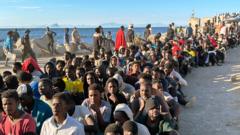
Spain Implements Border Controls Against Italy Over Ceuta Migration Surge
Spain has activated comprehensive border controls directed at Italy in response to an unprecedented migrant influx that has strained diplomatic relations between the two Mediterranean nations. The escalating tensions stem from approximately 78,000 migrants who have crossed from neighboring Morocco into the Spanish exclave of Ceuta, triggering what officials describe as a critical migration situation requiring immediate intervention through Spain's border controls.
Understanding the Migration Influx from Morocco
The substantial arrival of roughly 78,000 migrants from Morocco into Ceuta has created unprecedented pressure on Spain's administrative and security infrastructure. This significant movement of people has prompted Spanish authorities to reassess their border management protocols and implement stricter enforcement measures. The concentration of migrants in this strategically located Spanish territory has raised concerns about resource allocation, processing capacity, and humanitarian coordination across the region.
Italy's Response and Border Enforcement Measures
Italy's decision to introduce its own border controls represents a coordinated response to the broader migration pressures affecting both nations. Italian authorities have established enhanced screening procedures and documentation verification at their borders, reflecting growing concerns about secondary migration patterns. These measures reflect Italy's commitment to managing migration flows while maintaining security standards within its territory.
The Role of Ceuta in European Migration Patterns
Ceuta, as a Spanish autonomous city located on the North African coast, has become a critical entry point for migrants seeking passage into Europe. The geographical positioning of this exclave makes it particularly vulnerable to migration waves originating from Morocco and West African nations. Spain's implementation of border controls against Italy underscores the interconnected nature of European migration challenges and the need for coordinated responses across national boundaries.
Diplomatic and Security Implications
The imposition of border controls between Spain and Italy signals underlying tensions regarding burden-sharing in migration management across the European Union. Both nations face competing pressures: the humanitarian imperative to process asylum claims fairly and efficiently, while simultaneously maintaining border security and managing public resources. Spain's border controls represent an attempt to regulate the secondary movement of migrants who might otherwise attempt to transit through Italy toward Northern Europe.
International Response and EU Coordination
European Union officials have been monitoring the situation closely, recognizing that unilateral border control measures can create complications for the Schengen Area's principles of free movement. The escalating row between Spain and Italy over migration management in Ceuta highlights persistent challenges in achieving unified European asylum and migration policies. Stakeholders from both nations have engaged in discussions aimed at establishing more equitable burden-sharing mechanisms.
Humanitarian and Processing Challenges
The processing of 78,000 migrants has overwhelmed local administrative facilities in Ceuta, creating bottlenecks in asylum interviews, health screenings, and documentation verification. Spain's border controls with Italy are partly designed to prevent migrants from being distributed unevenly across European territory without proper coordination. This situation underscores the critical need for enhanced capacity in reception facilities and more efficient case management systems.
Looking Forward: Solutions and Future Cooperation
Both Spain and Italy are exploring longer-term solutions to address migration flows from North Africa while maintaining functional border management. Enhanced cooperation with Moroccan authorities regarding border security and migration prevention represents one potential avenue for reducing future influxes. Additionally, strengthened EU funding for border management infrastructure in frontline states like Spain could alleviate pressure and reduce the necessity for internal border controls between member states.


