
Hungary Parliament Removes President Sulyok From Office
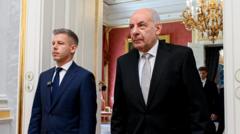
Hungary Parliament Votes to Remove President From Office
Hungary's parliament has taken decisive action to remove President Tamás Sulyok from his position, marking a significant turning point in the country's political landscape. Sulyok, who was widely regarded as a close associate of former Prime Minister Viktor Orbán, now faces removal following the shift in governmental power that occurred when Orbán's administration concluded its long tenure this past spring.
Background on the Political Shift
The removal of the Hungarian president comes at a critical juncture in the nation's political history. Viktor Orbán, who had maintained his grip on power for over a decade and a half, relinquished his position as Prime Minister in April after serving for 16 consecutive years. His extended period in office had defined much of contemporary Hungarian politics, and his departure opened the door for significant institutional changes throughout the government structure.
Sulyok's Connection to Orbán's Government
Tamás Sulyok's career had been closely intertwined with Orbán's political movement. Political analysts and observers consistently characterized the president as a loyal supporter of the former premier's policies and political vision. His appointment and subsequent service in the presidency were widely understood as reflective of Orbán's continued influence within Hungarian institutions, despite his transition from the prime ministerial office.
The Parliamentary Vote and Its Significance
The parliamentary decision to remove President Sulyok from office represents more than a simple procedural matter—it symbolizes the broader realignment of political forces in Hungary following the change in executive leadership. The vote demonstrates the new parliamentary majority's commitment to reshaping the country's institutional framework and reducing the residual influence of the previous administration.
This action highlights the interconnected nature of Hungary's political system, where changes in leadership at the highest levels often cascade throughout various government offices and positions. The removal reflects shifting alliances and priorities within the Hungarian legislature, as lawmakers work to establish a government structure aligned with the new political direction established after Orbán's departure.
Implications for Hungarian Democracy
The removal of Sulyok from the presidency raises important questions about institutional continuity and political transitions in Hungary. The process underscores how deeply the previous administration's influence had penetrated governmental institutions, and the current parliament's determination to implement comprehensive changes across multiple levels of government.
The decision also illustrates the practical challenges of political transitions in systems where executive and legislative power have been closely aligned. As Hungary moves forward, this parliamentary action will likely serve as a precedent for how the country manages the complex process of institutional reform and political recalibration following extended periods of single-party or single-leader dominance.
Looking Ahead
The removal of President Tamás Sulyok from office marks a decisive moment in Hungary's post-Orbán political evolution. As the parliament continues its work of reshaping governmental institutions, observers will be watching closely to see how these changes affect the balance of power and governance structures across the Hungarian state apparatus. The implications of this decision will likely reverberate throughout Hungarian politics for years to come.


