
Helium-3 Mining on the Moon: The Future of Clean Energy
Understanding Helium-3 and Its Growing Importance
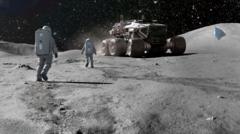
Helium-3 mining on the moon represents one of the most ambitious energy initiatives of the 21st century. This rare isotope, which exists in limited quantities on Earth, has become increasingly valuable due to its potential applications in advanced energy production. Scientists and space entrepreneurs worldwide are actively exploring extraction methods that could transform how humanity sources power for future generations.
Helium-3 differs from the more common Helium-4 found in typical helium supplies. The isotope possesses unique nuclear properties that make it particularly suitable for fusion energy reactions. Unlike traditional nuclear fission, fusion reactions powered by Helium-3 produce minimal radioactive waste, offering a cleaner alternative to conventional power generation methods currently relied upon globally.
Why Helium-3 Demand is Skyrocketing
The projected surge in Helium-3 demand stems from multiple converging factors in modern science and industry. Medical imaging equipment, particularly MRI machines used in hospitals worldwide, requires substantial quantities of liquid helium. Additionally, emerging technologies in quantum computing and advanced research applications continue to expand the material's necessity across numerous sectors.
The most significant driver of future demand, however, involves theoretical fusion energy development. As governments and private companies invest billions into fusion research programs, the need for viable fuel sources becomes paramount. Helium-3, with its superior fusion characteristics compared to alternative isotopes, stands as a prime candidate for powering next-generation reactors that could eventually supply electricity to major population centers.
Earth's Limited Helium-3 Reserves
Terrestrial reserves of Helium-3 are remarkably scarce. The isotope is produced naturally on Earth through radioactive decay of tritium, but the quantities generated annually fall far short of projected demand. Current global stockpiles, primarily maintained by governments for scientific and military applications, represent only a fraction of what future industries might require.
This scarcity drives both the cost and the strategic importance of alternative sourcing methods. Helium-3 prices have historically remained extremely high, accessible primarily to well-funded research institutions and government agencies. As demand increases and Earth-based supplies remain limited, the economic case for lunar extraction becomes increasingly compelling.
The Lunar Helium-3 Resource
The moon harbors substantially larger Helium-3 deposits than Earth, accumulated over billions of years through solar wind bombardment. Lunar regolith, the loose surface material covering the moon's landscape, contains measurable concentrations of this valuable isotope. Scientific estimates suggest that the moon's surface contains sufficient Helium-3 to meet global energy demands for centuries, potentially resolving long-term resource challenges facing advanced civilizations.
Lunar soil samples brought back by Apollo astronauts confirmed the presence of Helium-3 in concentrations significantly higher than found in terrestrial deposits. This discovery transformed the moon from a purely scientific curiosity into a potential economic asset, prompting serious discussions about establishing mining operations on the lunar surface.
Challenges in Lunar Mining Operations
Despite the theoretical abundance, extracting Helium-3 from the moon presents substantial technical and logistical obstacles. The extreme environment includes temperature fluctuations ranging from -280 to 260 degrees Fahrenheit, accompanied by constant exposure to solar radiation and cosmic particles. Equipment designed for such conditions must incorporate advanced materials and sophisticated engineering solutions.
Transportation represents another critical challenge. Launching mining equipment to the moon requires enormous quantities of fuel and specialized rocket technology. Returning extracted Helium-3 to Earth demands equally complex logistical solutions. Current space transportation costs remain prohibitively expensive for most commercial applications, though technological advances and increased competition may eventually improve economic viability.
Current Plans for Lunar Mining
Several entities have announced serious intentions regarding Helium-3 mining on the moon. Government space agencies, including those in China, India, and the European Union, have incorporated lunar resource exploitation into their long-term strategic plans. Private space companies, capitalizing on recent advances in reusable rocket technology, have similarly announced interest in developing lunar mining capabilities.
These organizations recognize that establishing a sustainable presence on the lunar surface requires developing infrastructure for mining, processing, and transportation. Initial missions will likely focus on resource surveys and feasibility studies, paving the way for eventual commercial extraction operations that could reshape global energy markets.
The Future of Energy and Space Resources
The prospect of Helium-3 mining on the moon symbolizes humanity's expanding approach to solving energy challenges. Rather than remaining limited to terrestrial resources, future societies may increasingly look toward space for materials essential to advanced technologies and clean power generation. This paradigm shift could drive unprecedented innovation in space exploration and utilization.
Successfully implementing lunar Helium-3 extraction would demonstrate that space-based resource economics can become viable. Such achievement could inspire subsequent mining ventures targeting other valuable materials found on asteroids, moons, and planetary bodies throughout the solar system.


