H5 Bird Flu Hits Australia: Critical Wildlife Crisis Explained
H5 Bird Flu Arrives in Australia: Understanding the Crisis
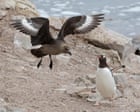
A highly pathogenic strain of bird flu, identified as H5 bird flu, has now reached the Australian mainland, triggering significant concerns among health authorities and environmental experts. Federal Agriculture Minister Julie Collins confirmed over the weekend that a brown skua discovered ill in Western Australia succumbed to the H5N1 virus, marking a critical moment for the nation's wildlife and agricultural sectors.
What Exactly is H5 Bird Flu?
H5 bird flu, specifically the H5N1 strain, represents one of the most dangerous avian influenza viruses currently circulating globally. This particular virus has demonstrated high mortality rates in infected birds and poses considerable risks to wild bird populations. The H5N1 pathogen belongs to a family of influenza viruses that primarily affect birds, though transmission to mammals has been documented in rare cases.
The virus operates by attacking the respiratory and digestive systems of affected birds, causing severe illness and death within days of infection. Different bird species exhibit varying levels of susceptibility, with some succumbing rapidly while others may carry the virus asymptomatically.
The Origin and Spread of H5 Bird Flu
The H5N1 virus has been circulating globally for nearly two decades, originating from Asia and subsequently spreading across multiple continents through migratory bird populations. The brown skua identified in Western Australia is a highly migratory species that travels vast distances across ocean waters, providing a plausible vector for the virus's transoceanic journey to Australian shores.
Scientists believe the virus reached Australia through infected wild birds migrating from regions where H5 bird flu is endemic. Seabirds, including skuas, albatrosses, and other pelagic species, have demonstrated particular susceptibility to the virus and serve as efficient disease vectors across geographic boundaries.
Human Health Risk Assessment
Health authorities emphasize that the risk of H5 bird flu transmitting to humans remains extremely low under normal circumstances. Human infections require direct contact with infected birds or their bodily fluids, which is uncommon in typical population settings. To date, documented human cases of H5N1 globally have been exceptional and typically involved individuals with direct occupational exposure to infected poultry.
Nonetheless, public health agencies maintain heightened surveillance protocols to monitor for any potential human cases. Standard hygiene practices, including hand washing after handling birds and avoiding contact with sick wildlife, provide adequate protection for the general population.
Agricultural Sector Implications
The emergence of H5 bird flu in Australia presents substantial challenges for the domestic poultry industry. Commercial chicken and turkey operations must implement enhanced biosecurity measures to prevent virus introduction into farm environments. These measures include restricted access to facilities, sanitization protocols, and health screening of workers.
The agriculture sector faces potential economic consequences if the virus establishes in domestic poultry populations, including trade restrictions, production disruptions, and significant mortality losses. State and federal agricultural authorities are coordinating surveillance and response strategies to contain any potential spread to commercial operations.
Wildlife and Environmental Impact
For Australia's native wildlife, H5 bird flu represents what experts characterize as a genuine wildlife emergency. The virus poses particular threats to seabird colonies, waterfowl populations, and other avian species that comprise essential components of Australian ecosystems. Vulnerable species may experience population declines, disrupting ecological balance and food webs.
Environmental agencies are implementing monitoring programs to track virus presence in wild bird populations and assess mortality patterns. Understanding how H5 bird flu affects diverse Australian bird species remains critical for conservation planning and ecosystem management.
Response and Preparedness Measures
Federal and state authorities have activated comprehensive response protocols following confirmation of H5 bird flu in Australian wildlife. These include enhanced surveillance at ports, airport biosecurity screenings, and coordination with agricultural producers. Wildlife rehabilitation centers are receiving guidance on handling potentially infected birds safely.
The discovery underscores the importance of ongoing disease monitoring infrastructure and international cooperation in tracking emerging infectious diseases that threaten both wildlife and agricultural resources.