
France's Air Conditioning Dilemma Amid Record Heat Spikes
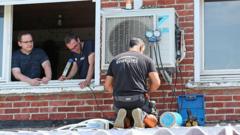
France Grapples with Air Conditioning Policy Shift
The nation of France finds itself at a critical crossroads regarding air conditioning adoption, as unprecedented temperature records force policymakers and citizens alike to reconsider decades-long skepticism about widespread cooling systems. Rising thermometers across the country have ignited intense discussions about environmental concerns, health priorities, and energy consumption patterns that dominate contemporary climate conversations.
Breaking Heat Records Across the Nation
Recent meteorological data confirms that France has experienced some of its most extreme temperature events in recorded history. These climatic anomalies have fundamentally altered public perception toward air conditioning, a technology that was previously viewed with considerable hesitation by large segments of the French population. The dramatic shift in weather patterns has made cooling systems no longer seem like luxuries but rather essential infrastructure investments for residential and commercial spaces.
The Environmental Perspective
Traditional French environmental philosophy emphasized passive cooling methods such as strategic ventilation, thick building insulation, and architectural design that minimizes solar heat absorption. However, when passive strategies prove inadequate during extreme weather events, the question of air conditioning becomes increasingly urgent and complex. Environmental advocates must weigh the energy consumption required for cooling against the health risks posed by dangerously elevated indoor temperatures, particularly for vulnerable populations including elderly citizens and those with preexisting medical conditions.
Public Health Considerations
Medical professionals have documented increased emergency room visits and heat-related illnesses during peak temperature periods. These health crises have prompted serious conversations about the public health benefits of accessible air conditioning systems. Communities that lack adequate cooling infrastructure have reported disproportionately higher rates of heat-related mortality, forcing health officials to reassess previous recommendations that discouraged air conditioning adoption.
Political Division and Energy Concerns
The air conditioning question has evolved into a significant political debate, dividing stakeholders along multiple ideological lines. Progressive environmentalists express concerns about increased electricity demand and carbon emissions associated with cooling system operation, while public health advocates and conservative politicians emphasize the necessity of protecting citizens from dangerous temperature extremes. This political divide reflects deeper tensions between climate sustainability goals and immediate human welfare priorities.
Energy Grid Capacity
France's electrical infrastructure, traditionally powered by nuclear energy, faces unprecedented demand during extreme heat events as residential users activate air conditioning systems simultaneously. Grid operators worry about potential blackouts and system failures if cooling demand continues to escalate without corresponding infrastructure investments. These technical concerns have forced energy policymakers to develop comprehensive strategies that balance cooling accessibility with grid stability and renewable energy integration.
Regional Variations in Adoption
Northern regions of France have historically resisted air conditioning installation, viewing such systems as unnecessary luxuries inappropriate for moderate climates. However, southern departments experiencing Mediterranean heat patterns have increasingly embraced cooling technology out of practical necessity. This geographic divide reflects broader questions about climate adaptation strategies and whether current weather patterns constitute permanent shifts or temporary anomalies.
International Context and European Trends
Other European nations have confronted similar air conditioning dilemmas during recent heat waves. Countries including Spain, Italy, and Greece have expanded cooling infrastructure significantly in response to escalating temperatures. France's reconsideration of its air conditioning stance aligns with broader European recognition that climate adaptation measures require practical policy adjustments despite environmental preferences.
Future Outlook and Policy Directions
Government officials are currently exploring regulatory frameworks that could balance cooling accessibility with energy efficiency requirements. Potential solutions include mandating high-efficiency equipment, promoting renewable-powered cooling systems, and implementing smart grid technologies that optimize electricity distribution during peak demand periods. These policy directions suggest that France's relationship with air conditioning will fundamentally transform in coming years as climate realities continue to reshape social priorities and political consensus.
The evolution of France's air conditioning debate demonstrates how unprecedented environmental conditions force societies to reassess long-held assumptions and adapt infrastructure strategies accordingly. As temperatures continue to present extraordinary challenges, the question is no longer whether France will embrace cooling systems, but rather how to implement them sustainably and equitably across all social groups.


