
Ford Brings Back Human Engineers as AI Quality Control Falls Short
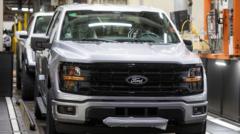
Ford Reverses Course on AI Quality Control Strategy
Ford Motor Company has made a significant strategic decision to rehire human engineers after determining that AI quality control systems cannot adequately replicate the expertise of seasoned technicians. The automotive manufacturer discovered critical limitations in its automated inspection processes, prompting leadership to rebalance its quality assurance operations with experienced personnel who bring invaluable technical knowledge to the assembly line.
The Gap Between Artificial Intelligence and Human Expertise
During its transition toward automation, Ford implemented artificial intelligence quality control systems designed to streamline production oversight. However, the company encountered substantial challenges when comparing the performance metrics of AI-driven inspections against the established benchmarks set by veteran engineers. The gap between AI quality control capabilities and human expertise became increasingly apparent as production data accumulated over several evaluation periods.
The automaker's veteran technicians, with decades of combined experience in automotive manufacturing, possess an intuitive understanding of vehicle assembly that current AI systems struggle to replicate. These experienced professionals can identify subtle defects, inconsistencies, and potential issues that might escape automated detection systems. Their expertise encompasses not only the technical aspects of vehicle construction but also the contextual knowledge necessary for comprehensive quality assessment.
Why Automation Alone Proved Insufficient
The decision to rehire human engineers reflects Ford's acknowledgment that complete reliance on artificial intelligence for quality control presents operational risks. Modern vehicles contain thousands of interconnected components, and ensuring proper assembly requires nuanced judgment that transcends simple pattern recognition algorithms. Machine learning systems, while proficient at specific repetitive tasks, often lack the adaptive reasoning capabilities that human engineers naturally employ.
Ford's quality assurance challenges highlight a broader reality within the manufacturing sector: automation excels at standardized, predictable processes but struggles with the complexity and variability inherent in automotive production. AI quality control systems performed adequately under controlled conditions but failed to maintain consistency when confronted with real-world manufacturing variables, unusual component combinations, and emerging defects that fall outside their training parameters.
Impact on Ford's Production Standards
By reintegrating human engineers into its quality control framework, Ford aims to restore confidence in its quality assurance mechanisms. The automotive manufacturer recognizes that maintaining competitive advantage requires preserving the institutional knowledge and problem-solving capabilities that experienced technicians provide. This workforce decision directly impacts the company's ability to deliver vehicles that meet both regulatory standards and customer expectations.
The rehiring initiative represents an investment in human capital that transcends simple cost-benefit analysis. Ford understands that quality failures damage brand reputation, incur warranty expenses, and create liability concerns far exceeding the operational savings generated by fully automated inspection processes. Veteran engineers serve as quality gatekeepers whose judgment protects both the manufacturer and its consumers.
Lessons from Ford's Automation Experience
Ford's experience demonstrates that successful manufacturing modernization requires a balanced approach integrating both advanced technology and human expertise. Rather than pursuing wholesale replacement of human workers with artificial intelligence systems, progressive manufacturers recognize that hybrid models combining automated preliminary inspections with human verification create superior outcomes. This collaborative framework leverages the speed advantages of AI quality control while maintaining the superior judgment capabilities of experienced engineers.
The company's decision acknowledges that innovation in automotive manufacturing must account for practical constraints and real-world performance limitations. AI quality control systems continue to improve, but their current iterations cannot completely substitute for the diagnostic skills, intuitive pattern recognition, and adaptive thinking that human technicians contribute to production environments.
Future Direction for Ford's Quality Operations
Going forward, Ford plans to implement a integrated quality assurance strategy where artificial intelligence systems handle preliminary screening and standardized inspections while human engineers perform comprehensive evaluations and address complex issues. This approach maximizes efficiency while preserving the quality safeguards that consumers and regulators expect from automotive manufacturers.
The automaker's recalibration of its workforce strategy signals a growing recognition throughout manufacturing industries that human workers retain essential value despite technological advancement. Ford's commitment to rehiring experienced engineers affirms that competitive manufacturing excellence requires combining innovation with the irreplaceable contributions of skilled professionals who dedicate their careers to maintaining production standards.


