Burnham Attributes UK Economic Struggles to Brexit and Thatcher Legacy
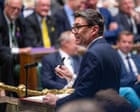
Burnham's First Commons Address as Prime Minister
Andy Burnham, the newly appointed prime minister, has publicly attributed Britain's economic challenges to the lasting impacts of Brexit and Margaret Thatcher's policies, marking a significant moment in his first parliamentary appearance since assuming office approximately six weeks ago. The prime minister emphasized that the nation must confront uncomfortable truths about the succession of strategic errors that have defined the past four decades of British politics.
Speaking directly to Members of Parliament, Burnham stressed the necessity for a frank evaluation of past decisions. He articulated a vision centered on rekindling national optimism and determination, stating that his administration is committed to ensuring the forthcoming decade will deliver substantially better outcomes than the previous one. This candid acknowledgment of Britain's economic trajectory has set the tone for his administration's approach to governance and policy reform.
Defence Spending Commitments and Military Investments
The prime minister provided strong indications that his government will increase defence expenditure to 3% of gross domestic product by 2030, signaling a significant shift in military funding priorities. Burnham specifically highlighted his appointment of John Healey as chancellor, suggesting that this selection was made deliberately because of Healey's established record and perspective on military spending requirements. This strategic decision underscores the administration's determination to strengthen Britain's defence capabilities in response to contemporary global security challenges.
The allocation of resources toward military modernization reflects broader concerns within the government regarding international stability and Britain's position on the global stage. By linking his chancellor's appointment directly to defence priorities, Burnham has demonstrated that military investment constitutes a cornerstone of his administration's financial strategy.
Water Industry Privatisation and Renationalisation Prospects
During his Commons speech, Burnham signaled openness toward investigating the potential renationalisation of Britain's water industry, describing the sector as a "leaking monument" to the failures of privatization policies. The prime minister indicated that his government is actively examining "all possible solutions" to address the chronic underperformance and infrastructure deficiencies that have plagued the water sector for decades. This positions renationalisation as a serious policy consideration within his government's agenda.
The characterization of the water industry as emblematic of privatization's shortcomings reflects growing public and political concern about the efficacy of private sector management in essential utility services. Burnham's willingness to explore alternative ownership models suggests a fundamental reassessment of the privatization approach that has dominated British policy since the Thatcher era.
Electoral Reform and Democratic Modernization
The prime minister opened discussions regarding potential electoral reform, indicating that Labour's next manifesto may address this contentious issue. Burnham articulated his view that meaningful electoral reform requires a clear electoral mandate from the British people. He acknowledged the existence of diverse perspectives within Parliament but expressed confidence that a broader consensus can be established during the forthcoming election campaign.
Burnham stated: "I do believe there needs to be a mandate to make that change. There are different views in this house, but I believe we will need to get a consensus at the next election. And if there is that consensus, then a change can be made in the next parliament." This measured approach demonstrates his intention to pursue democratic modernization while respecting the need for legitimate popular support.
Climate Policy and Energy Pragmatism
On environmental matters, Burnham confirmed his intention to attend the forthcoming Cop31 climate summit in Turkey, reaffirming the government's commitment to pursuing renewable energy initiatives. However, he emphasized a pragmatic approach to energy supply challenges, suggesting that the government will adopt flexible policies rather than adhering to ideological constraints on energy sources.
The prime minister's remarks hinted at potential approval of the Jackdaw gasfield project, indicating that the administration will not categorically reject fossil fuel development in pursuit of short-term political objectives. Burnham stated: "The mistake is saying it's got to be one or the other for political purposes. The truth is, it's going to have to be both." This pragmatic stance suggests the government will pursue simultaneous investment in both renewable and conventional energy sources to meet Britain's electricity requirements effectively.
Building National Optimism and Moving Forward
Throughout his address, Burnham consistently emphasized the importance of restoring public confidence and national optimism following the economic difficulties and political turbulence of recent years. His acknowledgment that Britain has taken "a series of wrong turns" during the preceding four decades serves as a foundation for his administration's commitment to corrective action and substantial policy reform.
The prime minister's willingness to directly assign responsibility for Britain's challenges to specific historical policies and events—rather than deflecting blame—represents a notable departure from conventional political rhetoric. This candid approach may facilitate broader acceptance of his administration's reform agenda while demonstrating accountability and serious intent regarding governance improvement.