
Bezos-Led Investment Group Transforms Liverpool FC's Financial Future
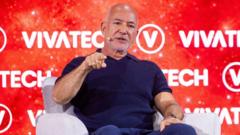
Bezos-Led Investment Group Transforms Liverpool FC's Financial Landscape
The involvement of Jeff Bezos and his consortium in Liverpool FC represents a significant moment for the historic English club, though the Bezos-led investment group's actual impact on the team's competitive spending remains more nuanced than initial headlines suggest. This strategic capital injection through FSG ownership restructuring signals a major shift in how the Merseyside institution will operate financially, yet raises important questions about what this transformation truly means for supporters and on-field performance.
Understanding the Investment Structure
When examining the Bezos investment framework, it becomes essential to distinguish between headline valuations and practical operational benefits. The consortium's entry into Liverpool's ownership structure does not automatically unlock unlimited transfer budgets or dramatic spending increases. Instead, the arrangement represents a recapitalization of FSG's existing stake, allowing current ownership to realize substantial returns while maintaining operational control.
The financial mechanics of this deal involve Bezos's investment vehicle acquiring minority stakes in Liverpool, with FSG retaining majority ownership and day-to-day management authority. This structure differs markedly from outright ownership transfers that might fundamentally alter club philosophy or spending patterns. Understanding this distinction proves crucial for fans concerned about maintaining Liverpool's established operational principles.
Impact on Transfer Market Capacity
The Bezos-backed capital injection creates interesting implications for Liverpool's transfer strategy. While additional investment theoretically improves the club's financial position, several practical constraints limit transformative spending increases. Premier League Financial Fair Play regulations, existing debt obligations, and revenue-based spending sustainability measures all continue affecting available transfer funds.
Liverpool's competitive advantage has historically derived from shrewd recruitment and player development rather than lavish spending. The club's analytical approach and modest net spending compared to Manchester City or Paris Saint-Germain reflects strategic choice rather than financial limitation. Even with Bezos investment capital, Liverpool's operational philosophy likely maintains this measured approach to squad building.
Supporter Sentiment and Club Values
Many Liverpool supporters express cautious optimism regarding the Bezos investment, though some constituencies harbor reservations about billionaire involvement in football ownership. The club's proud history emphasizes community connection and fan ownership principles that date back decades. The introduction of Amazon founder capital raises legitimate questions about preserving these institutional values.
FSG's tenure at Liverpool has produced considerable sporting success, including the 2020 Premier League title and 2019 Champions League triumph. The ownership group has balanced financial prudence with competitive ambition effectively. The Bezos-led consortium's involvement suggests continuity in this management approach rather than revolutionary change, which may reassure long-term supporters concerned about radical restructuring.
Strategic Advantages Beyond Capital
Beyond direct financial implications, the Bezos investment brings strategic advantages extending beyond pure spending power. His Amazon ecosystem connections potentially create unprecedented commercial opportunities, technological innovations in player analysis, and global marketing platforms. These competitive advantages might prove more valuable than straightforward transfer budget increases.
The consortium's technological expertise could revolutionize Liverpool's operational efficiency across scouting, analytics, and sports science divisions. Amazon's data capabilities might enhance player performance analysis and injury prevention systems, potentially providing marginal gains that accumulate into significant competitive advantages.
Timeline and Implementation Expectations
The Bezos investment implementation unfolds gradually rather than immediately transforming Liverpool's operations. FSG's continued stewardship maintains institutional stability while external capital gradually integrates into organizational systems. This measured approach reflects sophisticated ownership thinking about sustainable development rather than dramatic overnight changes.
Liverpool management expects to maintain current sporting direction under the Bezos-led consortium arrangement. Head coach continuity, recruitment philosophy, and youth development priorities remain consistent with established club strategy. Fans should anticipate evolution rather than revolution in how Liverpool operates across all departments.
Competitive Positioning Within English Football
The Bezos investment positions Liverpool competitively within the Premier League's evolving financial landscape. Manchester City's Abu Dhabi backing and Paris Saint-Germain's Saudi resources set competitive benchmarks that Liverpool's ownership previously operated beneath. The Amazon founder's involvement potentially narrows this financial gap without necessarily creating overwhelming spending advantages.
This recalibrated competitive standing might prove decisive in marginal situations where transfer opportunities arise. Additional capital flexibility could facilitate acquisition of key targets that previously remained financially inaccessible. Yet Liverpool's success ultimately depends more on organizational execution than pure spending capacity.
Long-Term Organizational Implications
The Bezos investment framework establishes important precedents for how established football clubs evolve financially while preserving institutional identity. The arrangement demonstrates that significant capital infusion need not require dramatic ownership changes or abandonment of established principles.
Liverpool's continuation under FSG operational leadership with Bezos consortium financial support represents a pragmatic approach to 21st-century football economics. This structure allows the club to compete effectively with better-capitalized competitors while maintaining the organizational culture that has driven recent successes.
Conclusion: Pragmatic Evolution Rather Than Revolution
The Bezos-led investment group's involvement with Liverpool FC represents significant financial development that warrants realistic assessment rather than exaggeration. While the Amazon founder's capital injection improves the club's financial position, practical limitations constrain spending expansion to measured increases rather than transformative changes. FSG's continued stewardship suggests operational continuity and philosophical preservation. Liverpool supporters can anticipate competitive enhancement without fundamental organizational disruption, reflecting sophisticated ownership management of capital infusion integration.


