
Badenoch Slams Starmer Over £5bn Defence Spending Gap
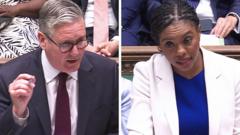
Conservative Leader Raises Concerns on Defence Spending Gap
Conservative Party leader Kemi Badenoch has launched a sharp critique against Prime Minister Keir Starmer, pointing to a significant defence spending gap that she argues undermines the government's commitment to national security. The prominent opposition figure has identified what she describes as a substantial deficit in the current defence investment plan, raising questions about the allocation of military resources.
The £5bn Shortfall in Defence Investment Plan
At the centre of Badenoch's criticism lies an alleged £5 billion shortfall within the government's defence investment plan. This significant financial discrepancy has sparked considerable debate within parliamentary circles, with the Conservative leader arguing that such an omission represents a failure to prioritize the nation's security infrastructure. The missing funding has become a focal point for opposition scrutiny of the current administration's defence strategy.
The defence spending gap identified by Badenoch suggests potential vulnerabilities in the government's approach to military modernization and capability development. Conservative Party officials contend that this budgetary oversight could have serious implications for the UK's defence readiness and its ability to meet emerging security challenges across multiple fronts.
Badenoch's Political Challenge to the Government
The opposition leader has characterized this discrepancy as evidence of inadequate planning and foresight within the administration. Kemi Badenoch has called for greater transparency regarding how defence resources are being allocated and managed. Her criticism extends beyond mere financial accounting, touching upon what she views as a broader failure to demonstrate genuine commitment to strengthening Britain's military capabilities.
In her assessment, the government's handling of the defence investment plan reflects a concerning pattern of budgetary mismanagement. Badenoch argues that this situation leaves her successor with an inherited problem that requires immediate attention and substantial corrective measures. The criticism has resonated within Conservative circles, where party members have echoed calls for improved fiscal discipline in defence spending.
Questions About Starmer Government's Defence Strategy
Prime Minister Keir Starmer's government faces mounting pressure to clarify its position on the alleged defence spending gap. The administration must provide detailed explanations regarding the identification and quantification of the missing £5 billion. Officials have been called upon to outline their plans for addressing this shortfall and ensuring that defence commitments are properly funded and executed.
The controversy surrounding defence finances has prompted broader discussions about national security priorities and budgetary allocation strategies. Labour government representatives maintain that their administration is committed to strengthening the UK's defence posture, yet the specific details of how this commitment translates into concrete financial provisions remain subjects of heated political debate.
Implications for Defence Capability and National Security
The potential impact of the identified defence spending gap extends beyond political rhetoric. Military analysts and defence experts have weighed in on the significance of the £5 billion shortfall, with some suggesting that such funding gaps could affect procurement schedules, personnel training, and technology modernization initiatives. These areas are considered critical to maintaining the UK's military effectiveness and technological edge.
The debate surrounding Kemi Badenoch's accusations has elevated concerns about whether the government's defence investment commitments are sufficient to meet evolving geopolitical challenges. Conservative analysts argue that any shortfall in defence spending represents a strategic weakness that adversaries might exploit.
Political Repercussions and Government Response
The opposition's revelations have placed the Starmer government on the defensive regarding its fiscal management of defence resources. Government officials have begun responding to these accusations, though their explanations have not entirely satisfied critics. The administration continues to assert its commitment to national security investments while seeking to clarify the technical aspects of budget planning and allocation.
This dispute underscores the ongoing political tensions between the government and opposition parties over defence policy and spending priorities. As the nation grapples with complex security challenges, the allocation of adequate resources to defence capabilities remains a paramount concern for policymakers across the political spectrum.
Looking Forward: Resolving the Defence Funding Question
The path forward requires the government to provide comprehensive answers regarding the defence spending gap and to demonstrate concrete steps toward resolution. Parliament will likely demand detailed briefings on how the identified shortfall will be addressed and when full funding will be restored to the defence investment plan.
This ongoing controversy reflects deeper concerns about budgetary transparency and the proper allocation of resources to critical national security functions. As the debate continues, both government and opposition remain focused on ensuring that Britain's defence capabilities remain robust and adequately supported.


