
Afghan Women's Lives Transformed Under Five Years of Taliban Control
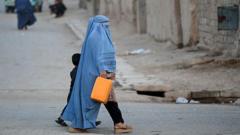
Afghan Women Describe Unrecognizable Lives After Five Years of Taliban Rule
The situation for Afghan women under Taliban rule has fundamentally altered the landscape of daily existence across the nation. After five years of Taliban governance, women throughout Afghanistan report that their lives have become increasingly difficult and unrecognizable compared to previous decades. The restrictions imposed on Afghan women have created an environment where basic freedoms and opportunities have been severely curtailed, affecting millions across the country.
Public Punishment and Legal Consequences
In interviews conducted by international media outlets, women from various regions of Afghanistan have disclosed harrowing accounts of public floggings and corporal punishment administered under Taliban interpretation of Islamic law. These punishments are often enacted for violations of strict dress codes, traveling without male accompaniment, or other infractions deemed unsuitable by Taliban authorities. The implementation of such measures has created an atmosphere of fear and uncertainty among the female population.
The Taliban's judicial system has reintroduced punishment methods that were largely abandoned in previous Afghan administrations. Public floggings have become a visible manifestation of the Taliban's approach to enforcement, occurring in town squares and public spaces where community members are often forced to witness these acts. Women report that these incidents have profound psychological impacts beyond physical injury, creating widespread anxiety about compliance with regulations.
Employment Barriers and Economic Displacement
The loss of employment opportunities represents another critical dimension of how Afghan women's lives have transformed under Taliban rule. Women who previously worked in government positions, education, healthcare, and private sector roles have been systematically removed from their positions. The Taliban's restrictions on women's employment have resulted in economic hardship for countless families who relied on female wage earners.
Teachers, nurses, civil servants, and business professionals have found themselves unable to continue their careers. Educational institutions that previously employed women as instructors have been restructured to exclude female staff members. This employment displacement has created cascading economic consequences, as families lose income sources and women lose professional independence and social standing that came with their work.
Healthcare Crisis and Medical Access Restrictions
Perhaps most alarmingly, Afghan women face dangerous barriers to accessing adequate healthcare services. The Taliban's restrictions on women's healthcare have created situations where medical treatment becomes life-threatening. Women are often prohibited from seeking medical care without male guardians present, a requirement that can delay critical interventions and emergency treatment.
Female healthcare providers have been removed from many facilities, and women patients frequently refuse or delay seeking treatment due to requirements to be examined by male doctors or to have male family members present during medical consultations. This has resulted in preventable complications during pregnancy, childbirth, and treatment of serious illnesses. Maternal mortality rates have increased as women avoid seeking prenatal and delivery care due to these restrictions.
Mental Health and Psychological Toll
The cumulative effect of living under strict Taliban rule has taken a severe psychological toll on Afghan women. Depression, anxiety, and trauma-related disorders have increased dramatically as women grapple with lost freedoms, economic insecurity, and constant restrictions on movement and behavior. The inability to work, study, or participate in public life has created profound mental health challenges.
Educational Opportunities Curtailed
Secondary education for girls has been severely restricted under Taliban rule, with many schools for female students closed indefinitely. This educational exclusion affects an entire generation of Afghan girls and young women, limiting their future opportunities and perpetuating cycles of dependence and limited social participation. Women who previously pursued higher education now find those pathways blocked.
Social and Personal Freedoms
Beyond specific legal restrictions, Afghan women describe a pervasive loss of basic social freedoms. Restrictions on clothing, movement, public appearance, and social interaction have fundamentally altered how women navigate daily life. The requirement for accompaniment by male relatives for public activities, restrictions on specific types of employment, and dress codes enforced through monitoring and punishment have created an environment of constant constraint.
International Attention and Documentation
These accounts from Afghan women have drawn international attention from human rights organizations, media outlets, and international bodies concerned with women's rights and humanitarian conditions. Documentation of Taliban rule's impact on women continues through interviews, investigative reporting, and testimonies that provide evidence of systematic restrictions and their consequences on the female population.
The stories shared by Afghan women serve as critical documentation of how the Taliban's governance has transformed society, creating conditions that fundamentally restrict freedoms and opportunities that had been gradually expanding during the previous two decades of international engagement in Afghanistan.


