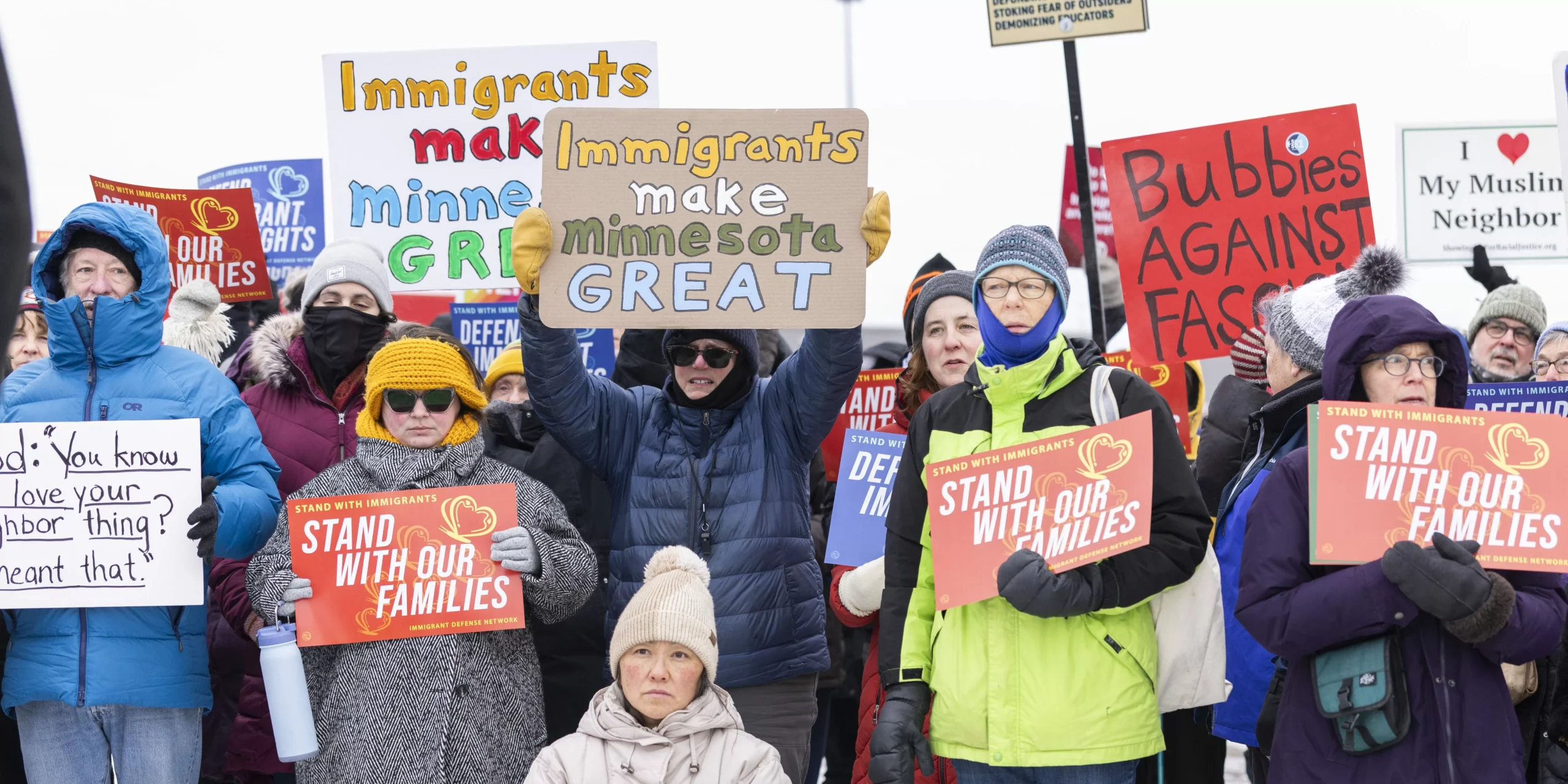
The recent crackdown by Immigration and Customs Enforcement (ICE) on the Somali community in Minnesota has caused shock and outrage across the country. What is meant to be an immigration raid has been exposed as a racist intimidation campaign, targeting innocent U.S. citizens of Somali descent. In response to this unjust targeting, many individuals with Somali roots are now carrying their passports at all times, fearing that they may be the next victim of ICE’s discrimination. This fear and uncertainty has sent shockwaves through the community, creating a sense of deep mistrust towards the government and its agencies.
The post U.S. Citizens With Somali Roots Are Carrying Their Passports Amid Minnesota ICE Crackdown published on The Intercept has shed light on the devastating impact that ICE’s actions have had on the Somali community. It is a powerful reminder of the discrimination and prejudice that still exists in our society, and the urgent need for us to address and confront it.
The Somali community in Minnesota has a long and rich history, with many families immigrating to the state in the late 1990s. Since then, they have become an integral part of the state’s cultural fabric, contributing significantly to its economy and diversity. However, despite their contributions, the community has faced many challenges, including discrimination and racial profiling.
The recent ICE raids have only added to this discrimination, and the targeting of U.S. citizens with Somali roots has been particularly alarming. Many of these individuals were born and raised in Minnesota, and have never even been to Somalia. Yet, they are now living in constant fear of being detained and deported from the only home they have ever known.
The Intercept’s article highlights the devastating impact that this fear and uncertainty has had on the community. Many individuals have been forced to alter their daily routines, avoiding certain areas and activities out of fear of being targeted by ICE. This has not only affected their personal lives but also their ability to work and support their families.
In response to this, many U.S. citizens with Somali roots have taken the drastic measure of carrying their passports at all times. This is a clear indication of the lack of trust in the government and its agencies. It is heartbreaking to see individuals who have spent their entire lives in this country feel like they need to prove their citizenship at all times.
It is essential to note that this is not the first time the Somali community has been targeted by ICE. In 2018, the agency conducted another series of raids, resulting in the detention of hundreds of individuals, many of whom were later released due to lack of evidence. This raises serious questions about the legitimacy and motives behind ICE’s actions. Is it truly about enforcing immigration laws, or is it a deliberate attempt to intimidate and discriminate against a specific community?
The Intercept’s article serves as a wake-up call for all of us. We cannot turn a blind eye to the injustices faced by our fellow citizens. It is our responsibility as a society to stand up against discrimination and demand accountability from our government. We must also recognize the important contributions of the Somali community and reject the false narrative that paints them as a threat.
In the face of such adversity, the Somali community in Minnesota has shown incredible resilience and unity. Organizations such as the Minnesota chapter of the Council on American-Islamic Relations have been actively advocating for the rights of the community and providing support to those affected by ICE’s actions. It is heartening to see such solidarity and determination in the face of injustice.
In conclusion, the recent ICE raids on the Somali community in Minnesota have exposed the ugly reality of discrimination and racial profiling that still exists in our society. It is a stark reminder that we have much work to do in terms of promoting equality and justice for all. The Intercept’s article has not only brought attention to this issue but has also sparked important conversations about the need for systemic change. It is our hope that this article will serve as a call to action for all of us to stand in solidarity with our Somali brothers and sisters and demand an end to these unjust and discriminatory practices.