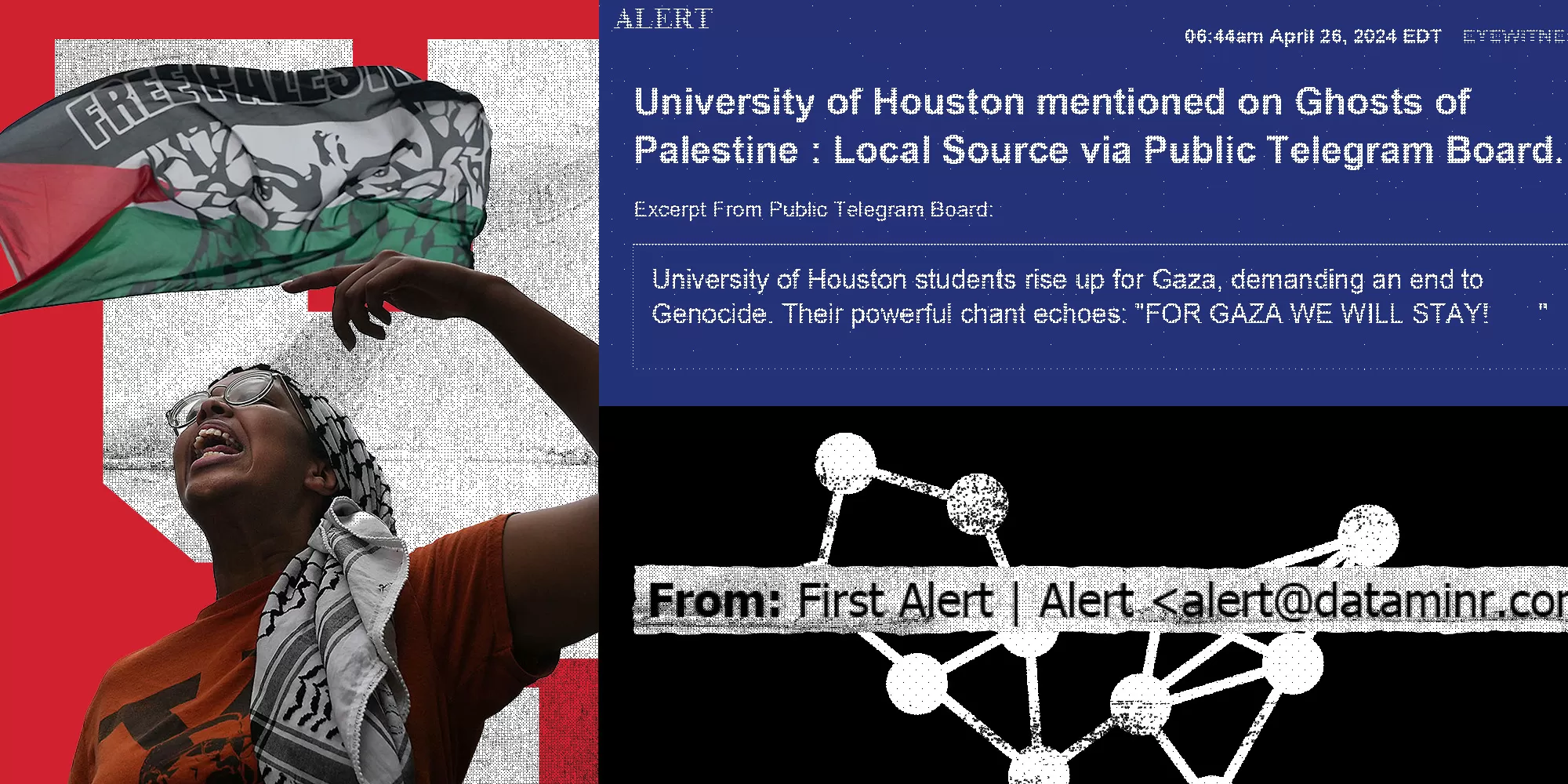
In recent years, universities have been facing increasing pressure to monitor and control student activism. This has become particularly evident in the case of two major American universities – the University of Houston and the University of Connecticut. As reported by The Intercept, these institutions have been using corporate partnerships to surveil their students and suppress protests against controversial organizations. This development raises serious concerns about the state of academic freedom and the role of corporate influence in higher education.
The University of Houston made headlines when it was revealed that officials had been using Dataminr, a social media monitoring tool, to keep an eye on their students. This program, which is used by various government agencies and corporations, scans social media platforms for potential threats and sends alerts to its subscribers. In this case, the university was monitoring hashtags related to the Palestinian cause and activism against the Israeli government. The goal was to identify any potential protests or disruptions on campus and take preventive measures.
This move by the University of Houston has sparked outrage among students and civil rights groups. It is seen as a violation of students’ privacy and a direct attack on their right to free speech and peaceful protest. Many have also raised concerns about the university’s partnership with Dataminr, which has a history of targeting Muslim communities and activists. By using this tool, the university has essentially outsourced its surveillance to a private company, giving them access to sensitive information about its students.
But the University of Houston is not the only institution that has been using corporate partnerships to monitor student activism. The University of Connecticut has also been in the spotlight for its ties to a major military contractor and donor, Raytheon. The company, which is one of the largest weapons manufacturers in the world, has faced widespread criticism for its involvement in the Israeli occupation of Palestine. This has led to protests and calls for divestment from students and faculty at the university.
However, instead of addressing these concerns, university administrators have been actively working to suppress any dissent. In emails obtained by The Intercept, officials expressed their worries about the impact of these protests on the university’s partnership with Raytheon. They also discussed strategies to counter the activism, including monitoring social media and deploying campus police. This blatant disregard for students’ voices and concerns is deeply concerning and speaks to the power of corporate influence on our education system.
The use of corporate partnerships for surveillance and suppression of student activism is a dangerous trend that must be addressed. Universities are meant to be spaces for critical thinking, open dialogue, and the free exchange of ideas. By allowing corporations to dictate their actions and policies, universities are compromising their core values and betraying the trust of their students.
Moreover, this issue goes beyond just the violation of students’ rights. It also highlights the larger problem of the corporatization of higher education. As universities become increasingly reliant on corporate partnerships and donations, they are sacrificing their autonomy and academic freedom. This can have serious consequences for the quality of education and the pursuit of knowledge.
It is time for universities to re-examine their priorities and take a stand against the influence of corporations. They must prioritize the well-being and rights of their students over financial gains and partnerships. This means being transparent about their partnerships, actively engaging with student concerns, and upholding the principles of academic freedom.
In conclusion, the use of corporate partnerships to surveil and suppress student activism at the University of Houston and the University of Connecticut is a concerning development. It not only violates students’ rights but also exposes the influence of corporations on our education system. Universities must take a stand against this trend and prioritize the well-being and rights of their students. It is crucial for the future of academic freedom and the integrity of our education system.