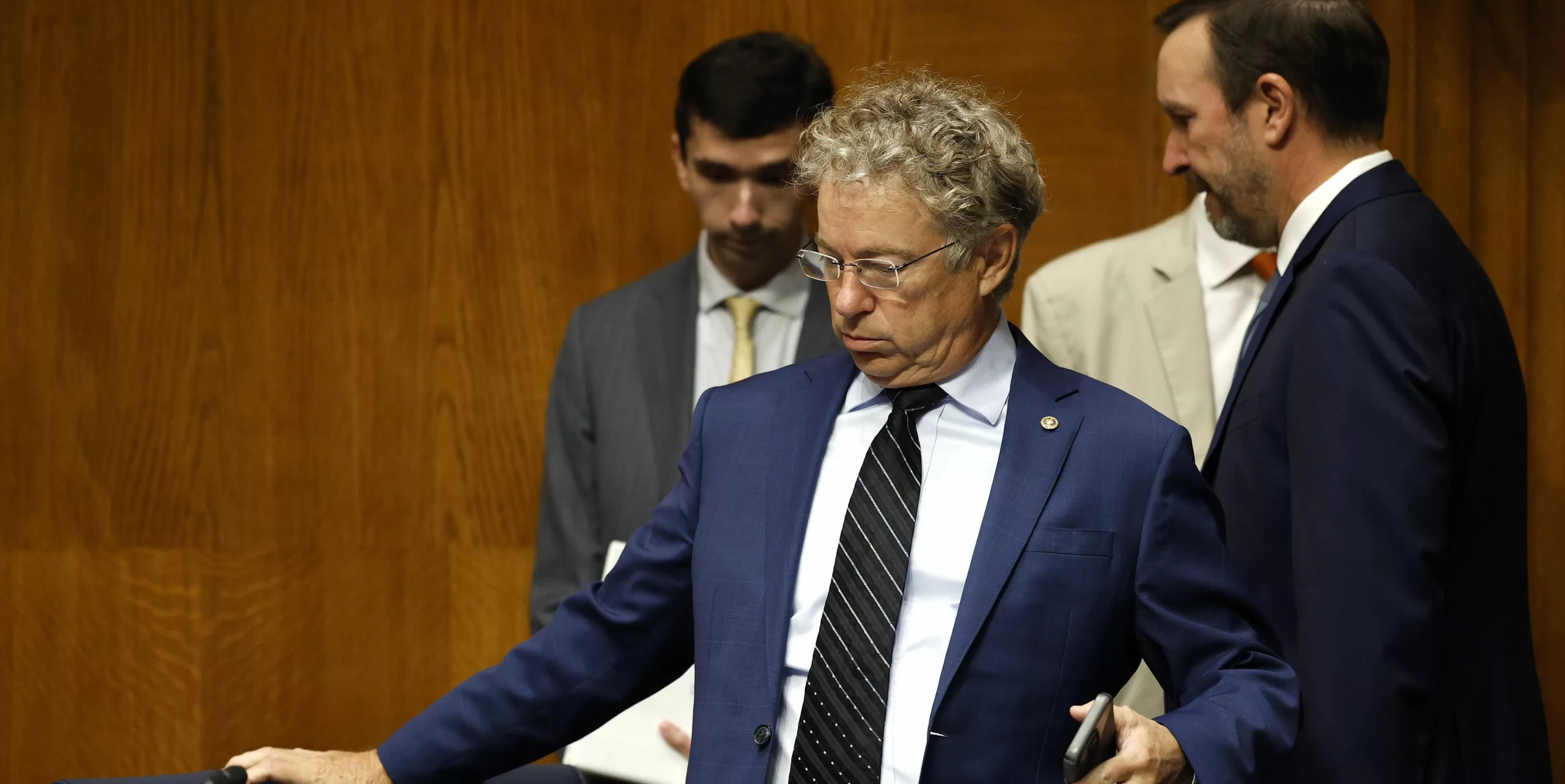
In a recent move, Senator Rand Paul, along with his colleagues Tim Kaine and Adam Schiff, attempted to block U.S. military action in Venezuela through a war powers resolution. This was potentially their last chance to do so, as tensions between the United States and Venezuela continue to escalate. However, despite their efforts, the resolution was ultimately rejected by the MAGA administration.
Senator Paul, a known advocate for non-interventionist policies, has been vocal about his concerns regarding the possibility of U.S. military involvement in Venezuela. He has repeatedly warned against the dangers of “warmongers” who push for military action without considering the consequences. And with the recent deployment of U.S. troops to the Colombian border, his concerns have only grown stronger.
The war powers resolution, introduced by Senator Kaine, aimed to limit the president’s ability to use military force in Venezuela without congressional approval. It was a crucial step in preventing another costly and unnecessary war, as the U.S. has a long history of intervening in Latin American countries. However, despite bipartisan support, the resolution was rejected by the MAGA administration, who argued that it would limit the president’s authority to protect national interests.
This decision has been met with disappointment and frustration by many, including Senator Paul. In a statement, he expressed his disappointment with the administration’s rejection of the resolution, stating that “the warmongers have won again.” He also emphasized the need for Congress to reassert its authority in matters of war and peace, rather than leaving it solely in the hands of the president.
But despite this setback, Senator Paul remains determined to continue his fight against unnecessary wars. He has been a vocal critic of U.S. military involvement in conflicts such as Iraq and Afghanistan, and has consistently advocated for a more restrained foreign policy. And with the current situation in Venezuela, his voice is more important than ever.
The rejection of the war powers resolution also highlights the divide within the MAGA administration. While President Trump has expressed his support for the Venezuelan opposition leader Juan Guaidó, his administration’s actions have been more cautious. National Security Advisor John Bolton and Secretary of State Mike Pompeo have been pushing for a more aggressive approach, while Vice President Mike Pence has been more measured in his statements.
This divide has caused confusion and uncertainty, not only within the administration but also among the American public. Many are questioning the true intentions of the U.S. in Venezuela and whether military intervention is really necessary. And with the rejection of the war powers resolution, these concerns have only grown stronger.
But despite the disappointment, there is still hope. Senator Paul’s efforts, along with those of his colleagues, have brought attention to the issue and sparked important discussions about the role of the U.S. in foreign conflicts. And with the 2020 elections approaching, it is crucial for the American people to make their voices heard and demand a more restrained foreign policy.
In the end, the rejection of the war powers resolution may have been a setback, but it is not the end of the fight. Senator Paul and his colleagues will continue to push for a more peaceful and diplomatic approach to the situation in Venezuela. And with the support of the American people, they may just succeed in preventing another unnecessary war.