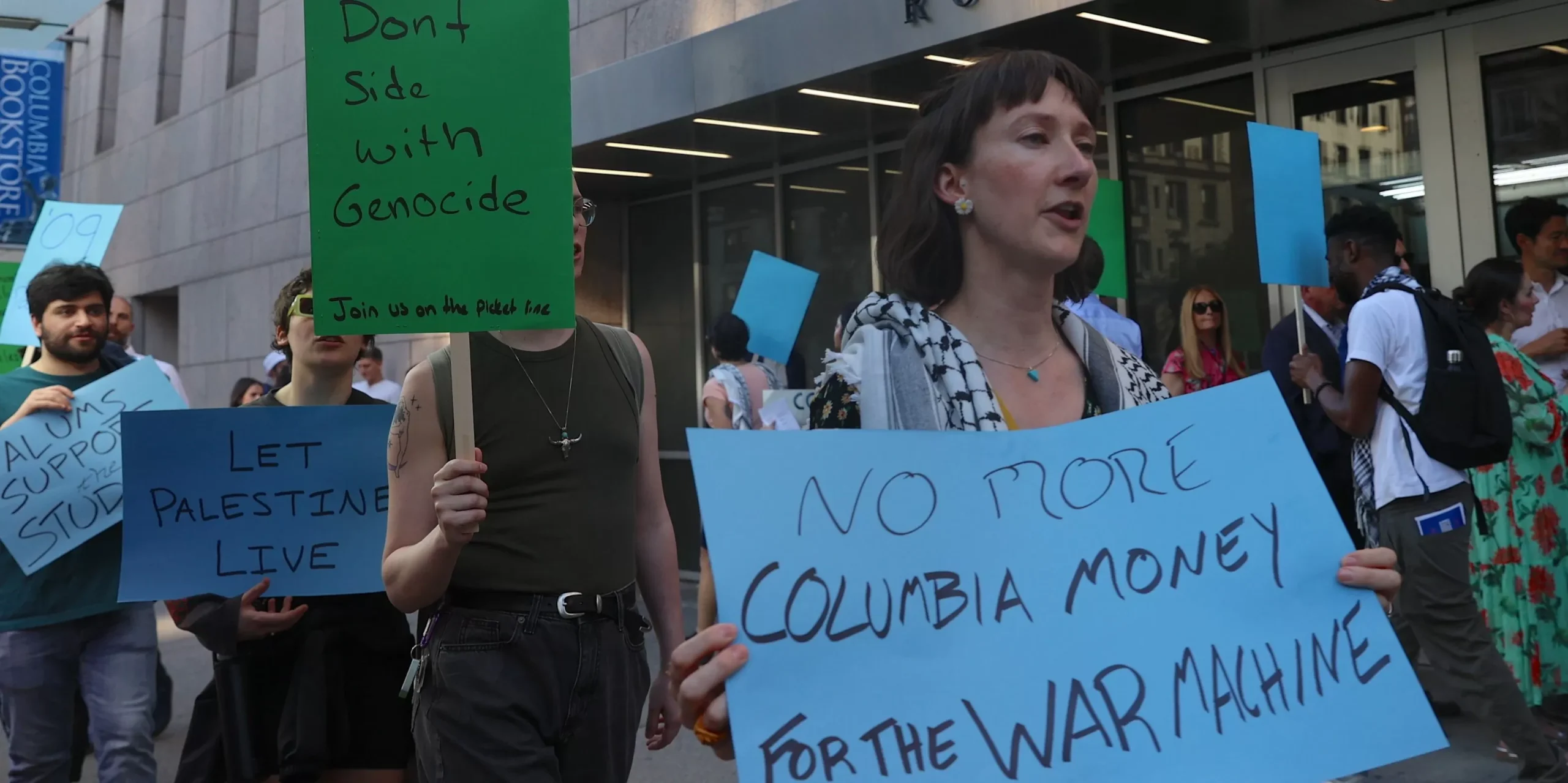
In a recent turn of events, new court documents have revealed the lengths to which the federal government went in order to unmask the identities of Columbia University students involved in protests. The documents show that the FBI sought a warrant to search the Instagram accounts of these students, but were ultimately blocked by federal judges on First Amendment grounds.
The Intercept, a renowned news outlet, has obtained these documents and shed light on the government’s attempts to suppress the voices of these student protesters. The documents reveal that the FBI was investigating the protests that took place on Columbia’s campus in April 2018, where students were advocating for the university to divest from companies involved in the fossil fuel industry.
According to the documents, the FBI was specifically targeting two students, identified only as John Doe 1 and John Doe 2, who were believed to be the leaders of the protests. The agency sought a warrant to search their Instagram accounts, hoping to gather evidence that could potentially lead to their arrest and prosecution.
However, the federal judges overseeing the case were quick to recognize the potential violation of the students’ First Amendment rights. They denied the FBI’s request, stating that it was a clear infringement on the students’ freedom of speech and expression. The judges also noted that the government’s actions were a violation of the Privacy Protection Act, which prohibits the search and seizure of materials used for journalistic purposes.
This decision by the judges is a significant victory for the students and their right to peacefully protest. It sends a strong message to the government that they cannot use their power to silence dissent and suppress the voices of those who speak out against injustice.
The Intercept’s report on this matter has sparked outrage and raised concerns about the government’s overreach in targeting student activists. Many have pointed out that this is not an isolated incident, and similar tactics have been used to suppress other forms of protest, such as the Black Lives Matter movement.
The students involved in the Columbia protests have also expressed their relief and gratitude for the judges’ decision. They believe that the government’s attempts to unmask them were a clear attempt to intimidate and discourage them from exercising their right to protest.
This incident serves as a reminder of the importance of the First Amendment and the need to protect it at all costs. It is a fundamental right that allows individuals to speak their minds and hold those in power accountable. The fact that federal judges recognized this and stood up for the students’ rights is a testament to the strength of our democracy.
Furthermore, this case highlights the crucial role of journalism in our society. The Intercept’s investigative reporting has brought this issue to the forefront, exposing the government’s actions and holding them accountable. It is a reminder of the power of the press and the need for independent and fearless journalism.
In conclusion, the federal judges’ decision to block the FBI’s attempt to unmask the identities of Columbia student protesters is a significant victory for free speech and the First Amendment. It sends a strong message to the government that they cannot use their power to suppress dissent and intimidate those who speak out against injustice. This incident also highlights the importance of journalism in our society and the need to protect it. Let us hope that this decision serves as a reminder to the government to respect the rights of individuals and uphold the principles of democracy.