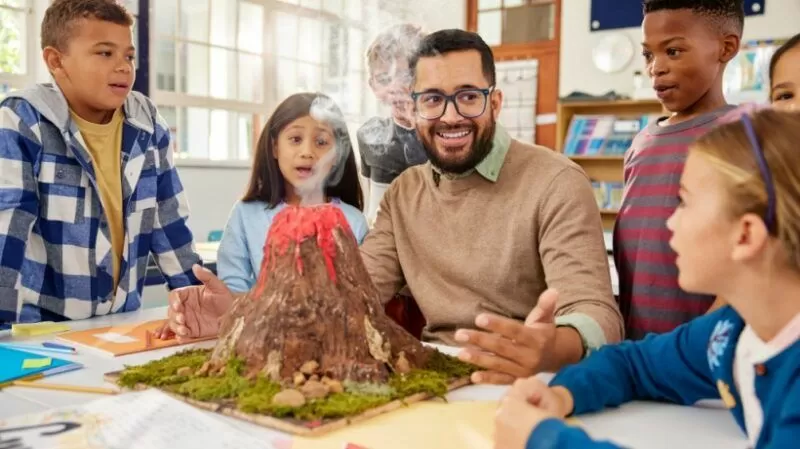
Have you ever watched someone else struggle and felt a sense of nervousness or anxiety wash over you? Perhaps you were watching a friend give a presentation or a family member take a test. Even though you weren’t the one in the spotlight, you couldn’t help but feel the same emotions as the person you were observing. This phenomenon is known as vicarious conditioning, and it plays a significant role in how we learn and develop as individuals.
Vicarious conditioning is a type of learning that occurs through observation. It is a process by which we learn emotions and behaviors by watching others instead of experiencing them firsthand. This concept was first introduced by renowned psychologist Albert Bandura in the 1960s, and it has since been studied and applied in various fields, including education, psychology, and even marketing.
So, how does vicarious conditioning work? Let’s take a closer look.
The Power of Observation
From a young age, we are constantly observing and imitating those around us. As infants, we learn to smile, laugh, and even cry by watching our parents and caregivers. As we grow older, we continue to learn from our surroundings, whether it’s through observing our peers, teachers, or even characters on TV.
This process of learning through observation is known as social learning, and it is a fundamental aspect of vicarious conditioning. When we see someone else being rewarded or punished for a particular behavior, we are more likely to imitate or avoid that behavior ourselves. For example, if we see a friend being praised for their hard work, we may be motivated to work harder ourselves. On the other hand, if we see someone being scolded for their behavior, we may learn to avoid that behavior in the future.
The Role of Emotions
Vicarious conditioning not only influences our behaviors but also our emotions. When we observe someone experiencing a particular emotion, we are likely to experience that same emotion ourselves. This is because we have mirror neurons in our brains that fire when we see someone else performing an action or experiencing an emotion. These neurons allow us to empathize with others and understand their feelings.
For example, if we see someone crying, we may feel sad or sympathetic. If we see someone laughing, we may feel happy or amused. This emotional contagion is a powerful tool for learning and connecting with others. It allows us to understand and relate to the experiences of those around us.
The Impact on Behavior
Vicarious conditioning can have a significant impact on our behaviors, both positive and negative. On one hand, it can motivate us to imitate positive behaviors and avoid negative ones. On the other hand, it can also lead us to develop fears and phobias based on the experiences of others.
For instance, if we see someone getting bitten by a dog, we may develop a fear of dogs even if we have never had a negative experience with one ourselves. This is because we have learned to associate dogs with pain and fear through vicarious conditioning.
In the same way, we can also learn positive behaviors through observation. For example, if we see someone successfully overcoming their fear of public speaking, we may be inspired to do the same. This is why role models and mentors play a crucial role in our personal and professional development.
Applying Vicarious Conditioning in eLearning
Vicarious conditioning has been widely applied in the field of education, particularly in eLearning. By incorporating real-life scenarios and examples into online courses, learners can observe and learn from the experiences of others. This not only makes the learning process more engaging but also helps learners to develop a deeper understanding of the subject matter.
For instance, in a course on public speaking, learners can watch videos of successful speakers and observe their body language, tone, and delivery. This can help them to develop their own skills and overcome any fears or anxieties they may have about public speaking.
In a course on leadership, learners can observe different leadership styles and their impact on team dynamics. This can help them to develop their own leadership style and learn from the successes and failures of others.
Incorporating vicarious conditioning in eLearning can also help to create a sense of community and connection among learners. By sharing their experiences and learning from each other, learners can feel more motivated and supported in their learning journey.
In Conclusion
Vicarious conditioning is a powerful tool for learning and development. By observing others, we can learn emotions and behaviors that we may not have experienced