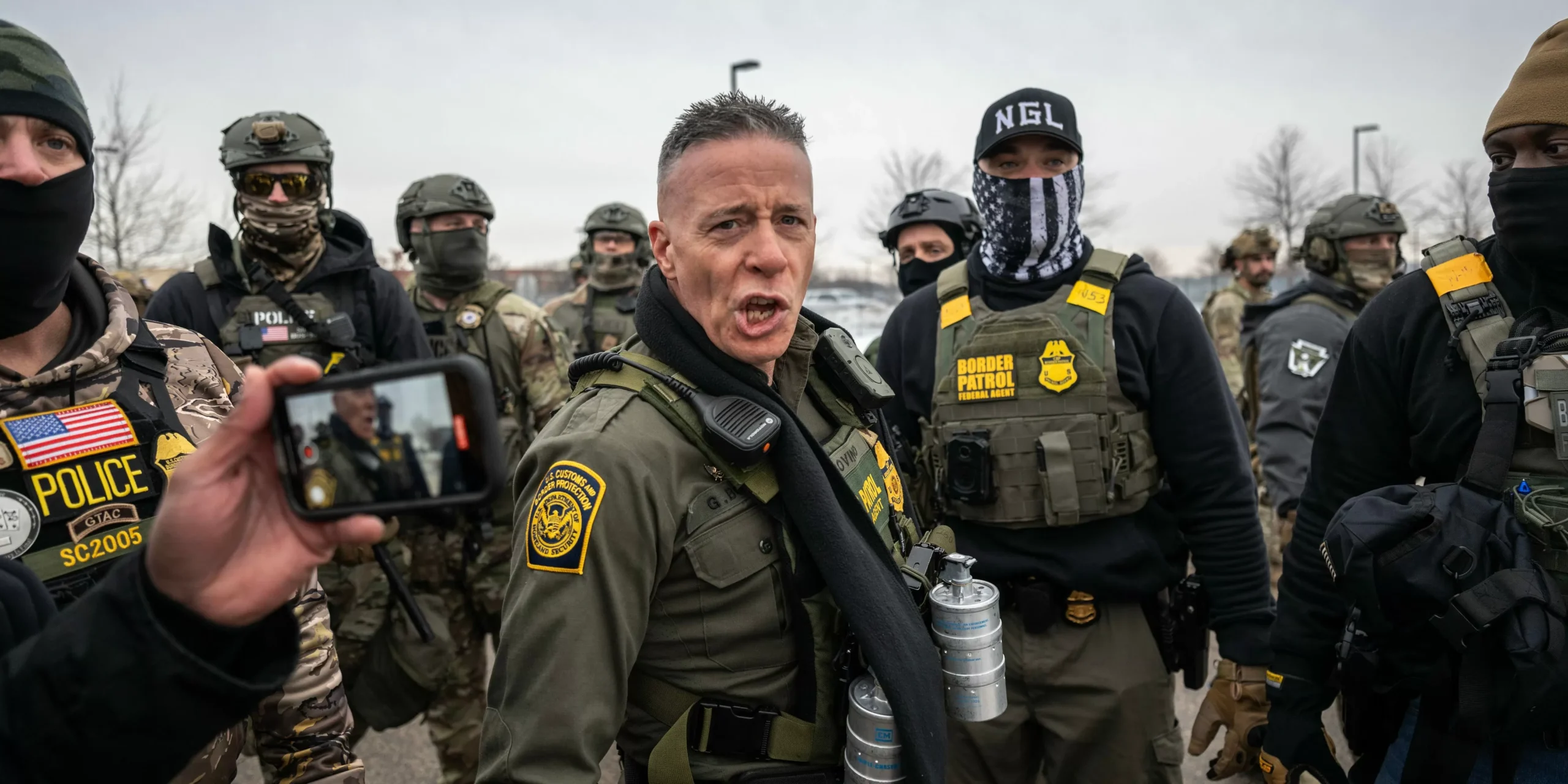
Ahmed Bin Hassan, a Somali American, was on his usual Uber route in Minneapolis when he was suddenly surrounded by more than a dozen masked federal agents. As they began to question him about his accent, Ahmed could feel his heart racing with fear and confusion. He had never experienced anything like this before.
“They could see my color,” Ahmed recalls. “I knew right away that I was being targeted because of my ethnicity.”
Ahmed’s story is just one of many that have recently come to light, exposing the alarming tactics of the United States Border Patrol. In the past few years, there has been a significant increase in the number of incidents where individuals have been harassed, questioned, and detained by Border Patrol agents without any valid reason.
But for Ahmed, this was not just another statistic. It was a terrifying and humiliating experience that left him feeling targeted and discriminated against solely because of his race.
“I have been living in the United States for over 10 years,” Ahmed says. “I am a law-abiding citizen, and I have never been in trouble with the law. Yet, I was treated like a criminal.”
Ahmed’s story is a stark reminder of the reality faced by many immigrants and people of color in the United States. Despite being a country built by immigrants, the current political climate has created a hostile environment for those who do not fit a certain mold.
In the case of Ahmed, he believes that his accent and physical appearance were the sole reasons for being targeted by Border Patrol agents. And he is not alone. Many others have shared similar experiences, where they were stopped and questioned by Border Patrol agents solely based on their race or ethnicity.
The incident has sparked outrage and raised concerns about the actions of Border Patrol agents. Many have questioned the legality and morality of these tactics, which seem to be driven by racial profiling.
The American Civil Liberties Union (ACLU) has been at the forefront of fighting against these unjust practices. They have filed numerous lawsuits against Border Patrol agents, challenging the legality of their actions and seeking justice for those who have been targeted.
“Racial profiling is not only illegal, but it also goes against the values of our country,” says Andrea Flores, deputy director of policy for the ACLU’s Equality Division. “No one should be targeted or harassed because of their race or ethnicity.”
The incident has also brought attention to the role of Uber drivers in the immigration debate. Many Uber drivers, like Ahmed, are immigrants who are just trying to make a living and contribute to their communities. Yet, they are constantly under scrutiny and targeted by law enforcement agencies.
“I am just trying to provide for my family,” Ahmed says. “But incidents like this make me question if I am welcome in this country.”
The Uber community has also shown support for Ahmed and others who have faced similar experiences. The company released a statement condemning the actions of Border Patrol agents and reaffirming their commitment to providing a safe and inclusive environment for all drivers and riders.
But for Ahmed, the incident has left a lasting impact. He no longer feels safe in his own city and is constantly worried about being targeted again.
“I am an American citizen, but I don’t feel like one,” Ahmed says. “I am constantly reminded that I am different, and that is a painful reality to live with.”
Ahmed’s story is a reminder that the fight against racial profiling and discrimination is far from over. It is a call to action for all of us to stand up against these injustices and fight for a more inclusive and equal society.
As for Ahmed, he hopes that by speaking out about his experience, he can bring attention to the issue and help prevent others from facing the same fate.
“I refuse to be silenced,” Ahmed says. “I will continue to speak out against these injustices and fight for a better future for all immigrants and people of color in this country.”