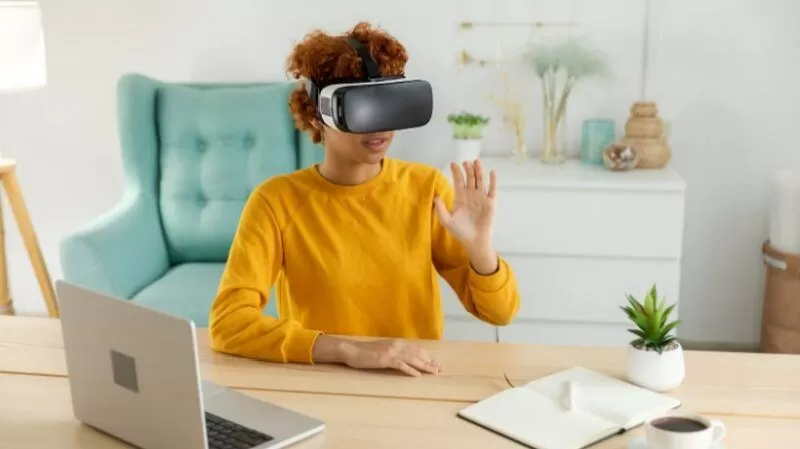
The world of employee training is constantly evolving, and one of the latest advancements that is garnering a lot of attention is Virtual Reality (VR). VR is changing the way organizations approach training, and it’s creating a ripple effect of positive outcomes. With the help of VR, organizations are able to enhance training experiences in ways that were previously impossible. Gone are the days of boring slides and heavy content, and these outdated assumptions are being turned on their head. Let’s explore how VR is transforming employee training and why it’s being embraced by organizations worldwide.
First and foremost, VR is providing employees with a more engaging and immersive training experience. It has the ability to transport them to a completely different environment, creating a sense of presence that traditional training methods lack. This allows for a more meaningful and impactful learning experience, as employees are able to visualise and interact with situations that closely mimic real-life scenarios. For example, a customer service representative can be placed in a virtual environment where they have to handle irate customers and use their skills to resolve the situation. This type of training allows them to practice in a safe and controlled environment, without the risk of real-world consequences. As a result, employees are better equipped and more confident when faced with similar situations in their actual roles.
Moreover, VR is breaking down geographical barriers and making training more accessible. With the rise of remote work, it’s becoming increasingly difficult to gather employees in one physical location for training. VR solves this problem by providing a platform for remote employees to participate in the same training program as their in-office counterparts. This not only promotes inclusivity but also ensures that all employees receive the same quality of training regardless of their location. Additionally, VR eliminates the need for travel and accommodation expenses, making training more cost-effective for organizations.
Another advantage of VR in employee training is the ability to track and measure progress. Traditional methods of training rely heavily on assessments and evaluations, which can often be subjective. With VR, organizations can collect real-time data on employee performance, allowing for more accurate and objective evaluations. This data can then be used to identify gaps in training and areas of improvement for employees. By tracking progress, organizations can ensure that their employees are continuously learning and developing their skills.
Furthermore, VR is making training more fun and enjoyable for employees. Let’s face it, traditional training methods can be monotonous and dull. But with VR, employees are actively participating in their learning through hands-on experiences and interactive simulations. This not only keeps them engaged but also makes the training more memorable. VR games and scenarios can be designed to mimic the job roles and tasks of employees, making the training relevant and relatable. As a result, employees are more likely to retain the information and apply it to their roles.
Additionally, VR is a cost-effective solution for organizations’ training needs. It eliminates the need for costly equipment and materials, such as printed manuals and physical training spaces. With VR, all that is needed is a headset and a computer, making it a more sustainable and eco-friendly option. It also reduces the need for trainers, as VR training programs can be pre-designed and delivered remotely. This not only saves organizations time and money, but it also allows trainers to focus on more specialized and personalized training sessions.
In conclusion, Virtual Reality is revolutionizing employee training and turning outdated assumptions into opportunities. It’s providing an engaging, accessible, and cost-effective solution for organizations worldwide. With the ability to create immersive and interactive learning experiences, VR is transforming the way employees learn and develop their skills. By embracing this technology, organizations are not only investing in their employees but also setting themselves up for success in the constantly changing business landscape. So, let’s welcome VR with open arms and embrace its potential for a more efficient and effective approach to employee training.