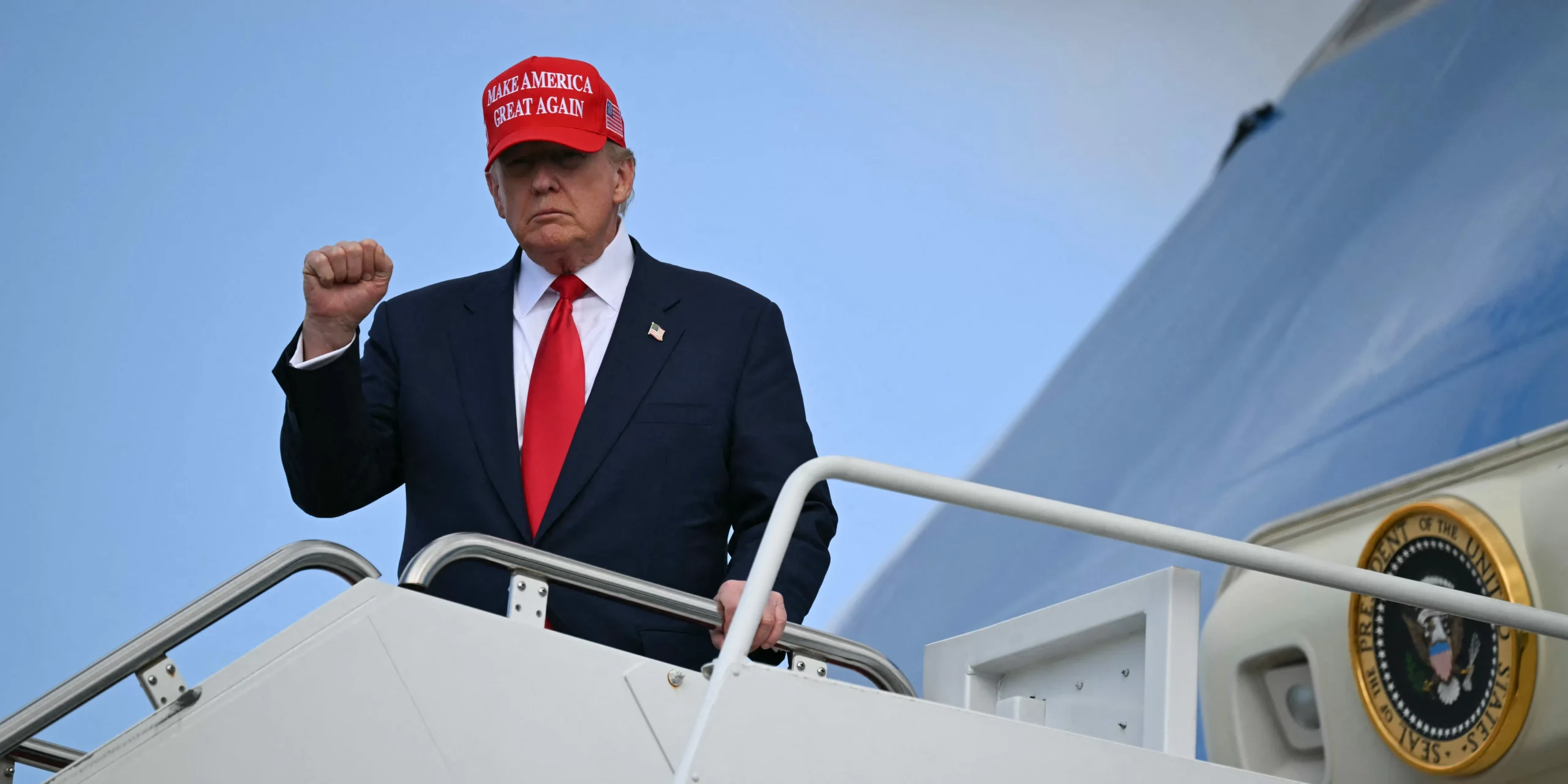
In recent years, the world has witnessed a rise in Christian nationalism, a political ideology that seeks to promote and protect the interests of Christianity in government and society. This ideology has been on full display in the foreign policy decisions of the Trump administration, particularly when it comes to Africa.
In a series of controversial moves, President Trump has ended deportation protections for South Sudanese immigrants, prioritized asylum for white South Africans, and even threatened to invade Nigeria. These actions are not only harmful and discriminatory, but they also reveal the dangerous influence of Christian nationalism on Trump’s foreign policy towards Africa.
The decision to end deportation protections for South Sudanese immigrants is a clear example of how Christian nationalism is shaping Trump’s policies. South Sudan is a predominantly Christian country, and the Trump administration’s move to deport its citizens goes against the very principles of Christian compassion and empathy. It also ignores the fact that South Sudan is currently facing a humanitarian crisis, with millions of people in need of aid and protection.
Furthermore, the prioritization of asylum for white South Africans is a blatant display of Christian nationalism. While there is no denying that white farmers in South Africa face violence and discrimination, the Trump administration’s decision to prioritize their asylum claims over those of other groups is deeply troubling. It sends a message that the lives and well-being of white Christians are more valuable than those of people of color and other religious groups.
But perhaps the most alarming display of Christian nationalism in Trump’s foreign policy towards Africa is his threat to invade Nigeria. In a phone call with Nigerian President Muhammadu Buhari, Trump reportedly expressed his willingness to send troops to Nigeria to help combat terrorism. While terrorism is a serious issue in Nigeria, Trump’s offer to send troops is not only a violation of Nigeria’s sovereignty but also a dangerous display of Christian nationalism.
Nigeria is a diverse country with a significant Muslim population, and Trump’s offer to send troops can be seen as an attempt to protect and promote Christianity in the region. It also ignores the fact that Nigeria has its own capable military and does not need outside intervention. This move by Trump not only undermines Nigeria’s sovereignty but also perpetuates the harmful narrative that Christianity is under attack in Africa.
These actions by the Trump administration are not isolated incidents but are part of a larger pattern of Christian nationalism in his foreign policy towards Africa. This ideology, which seeks to promote and protect the interests of Christianity, is not only harmful but also goes against the principles of democracy and human rights.
Christian nationalism has no place in foreign policy, and it is deeply concerning that it is shaping the decisions of the most powerful country in the world. It not only undermines the values of religious freedom and equality but also perpetuates harmful stereotypes and divisions.
It is essential for the international community to recognize and address the dangerous influence of Christian nationalism in Trump’s foreign policy towards Africa. This can be done by speaking out against discriminatory policies and advocating for a more inclusive and compassionate approach to foreign relations.
In conclusion, the recent actions of the Trump administration towards Africa are a clear indication of the dangerous influence of Christian nationalism in his foreign policy. The decision to end deportation protections for South Sudanese immigrants, prioritize asylum for white South Africans, and threaten to invade Nigeria are all part of the Christian nationalist playbook. It is time for the international community to stand against this harmful ideology and promote a more inclusive and compassionate approach to foreign relations.