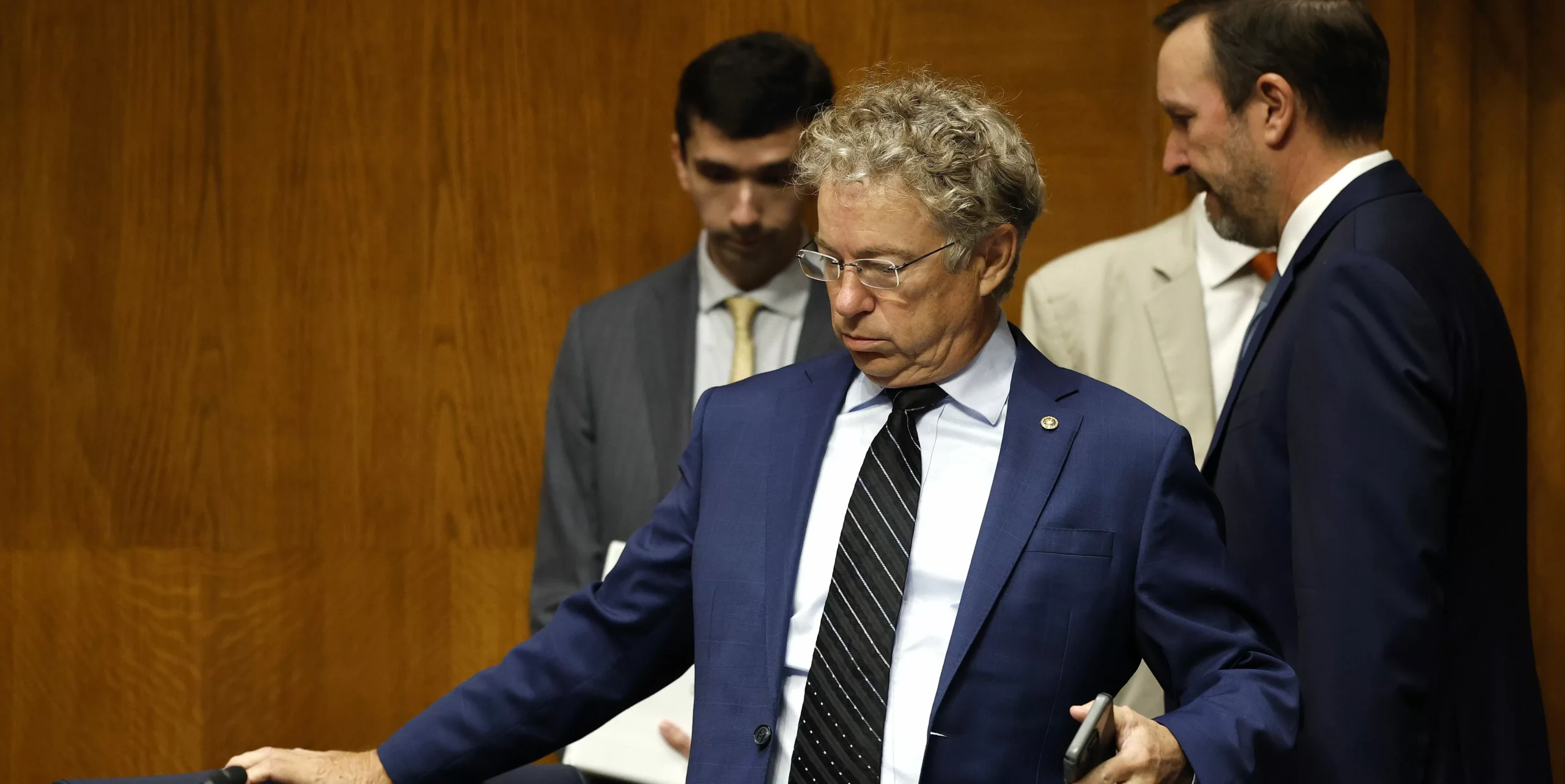
In a recent move to block U.S. military action in Venezuela, Senator Rand Paul, along with his colleagues Tim Kaine and Adam Schiff, introduced a war powers resolution. This resolution was seen as a last chance effort to prevent the United States from getting involved in yet another costly and unnecessary war. However, despite the efforts of these three lawmakers, the resolution was ultimately rejected by the Trump administration and his supporters.
Senator Paul, a known advocate for non-interventionist policies, has been vocal about his concerns regarding the potential military intervention in Venezuela. He has repeatedly warned against the dangers of getting entangled in another foreign conflict and has urged his fellow lawmakers to exercise caution before making any decisions.
In a statement, Senator Paul expressed his disappointment with the rejection of the war powers resolution, stating that it was a missed opportunity to prevent another disastrous war. He also called out the “warmongers” within the administration who were pushing for military action in Venezuela.
But despite Senator Paul’s warnings and efforts, the Trump administration and his supporters have rejected the war powers resolution. This decision has been met with criticism from both sides of the political spectrum, with many questioning the motives behind the rejection.
The rejection of the war powers resolution has also sparked a debate about the role of the United States in international conflicts. Many argue that the U.S. should not be the world’s police and should focus on addressing issues within its own borders instead of getting involved in foreign conflicts.
However, the rejection of the resolution has also been seen as a victory for the Trump administration and their “America First” policies. The administration has been vocal about their support for the opposition leader in Venezuela, Juan Guaido, and has been pushing for his recognition as the legitimate leader of the country. The rejection of the war powers resolution is seen as a way to maintain this stance and avoid any potential hindrances in their efforts to support Guaido.
But despite the rejection of the resolution, Senator Paul and his colleagues have vowed to continue their fight against any potential military intervention in Venezuela. They have also called on the American people to voice their concerns and demand that their government does not get involved in another costly and unnecessary war.
The rejection of the war powers resolution also highlights the divide within the Republican party. While Senator Paul and a few others have been vocal about their opposition to military intervention, many within the party have supported the administration’s stance on Venezuela. This divide raises questions about the party’s principles and their commitment to non-interventionist policies.
In conclusion, the rejection of the war powers resolution by the Trump administration and his supporters is a disappointing outcome for those who have been advocating for a peaceful resolution in Venezuela. It is a missed opportunity to prevent another disastrous war and a reminder of the dangers of warmongering. However, the fight is not over, and it is up to the American people to demand that their government does not get involved in another costly and unnecessary conflict. As Senator Paul said, “We must continue to speak out against the warmongers and demand a peaceful resolution in Venezuela.”