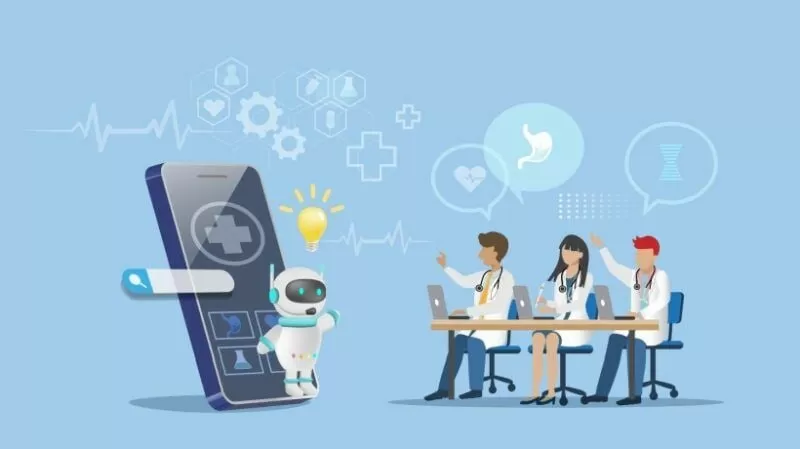
Medical schools have long been considered the pinnacle of education for aspiring doctors. With rigorous coursework, hands-on training, and a focus on critical thinking and problem-solving, these institutions have produced some of the best healthcare professionals in the world. However, as technology continues to advance at an unprecedented rate, medical schools are facing a new challenge – keeping up with the AI-healthcare revolution.
Artificial intelligence (AI) has already made its mark in various industries, and healthcare is no exception. From assisting in diagnosis and treatment to streamlining administrative tasks, AI has the potential to revolutionize the way healthcare is delivered. And as the use of AI in healthcare becomes more prevalent, it is crucial for medical schools to adapt and equip their students with the necessary skills to thrive in this AI-assisted future.
Unfortunately, many medical schools are falling behind in this regard. While some have started incorporating AI into their curriculum, the majority are still relying on traditional teaching methods. This is a missed opportunity for both students and the healthcare industry as a whole.
So, why are medical schools lagging behind in embracing AI? One reason could be the lack of understanding and awareness of the potential of AI in healthcare. Many educators and administrators may not fully grasp the capabilities of AI and how it can enhance medical education. This highlights the need for collaboration between medical schools and AI experts to bridge this knowledge gap and develop effective strategies for incorporating AI into the curriculum.
Another factor could be the fear of AI replacing human doctors. While it is true that AI can perform certain tasks more efficiently and accurately than humans, it cannot replace the empathy and critical thinking skills that are essential for healthcare professionals. Instead, AI can complement and enhance these skills, allowing doctors to focus on more complex and critical tasks.
Despite these challenges, there are some medical schools that have recognized the potential of AI and have taken steps to incorporate it into their curriculum. For example, the University of California, San Francisco (UCSF) has launched an AI curriculum for medical students, which includes courses on machine learning, data science, and AI ethics. This will not only prepare students for the AI-assisted future of healthcare but also equip them with the skills to critically evaluate and use AI in their practice.
Similarly, the University of Toronto has introduced an AI and healthcare course for medical students, which covers topics such as AI in medical imaging, natural language processing, and predictive analytics. The course also includes hands-on projects, allowing students to apply their knowledge in real-world scenarios. This approach not only enhances students’ understanding of AI but also prepares them for the practical application of AI in their future careers.
Apart from incorporating AI into the curriculum, some medical schools are also using AI in other aspects of education. For instance, the University of Michigan Medical School has developed an AI-powered virtual patient simulator, allowing students to practice clinical skills in a realistic and safe environment. This not only improves students’ clinical skills but also reduces the risk of errors in real-life patient care.
The benefits of incorporating AI into medical education are numerous. It not only prepares students for the AI-assisted future of healthcare but also enhances their critical thinking, problem-solving, and data analysis skills. Additionally, it allows for a more personalized learning experience, catering to the individual needs and pace of each student.
In conclusion, medical schools must rise to meet the AI-healthcare revolution instead of falling behind. The incorporation of AI into medical education is crucial for preparing students for the future of healthcare and ensuring the delivery of high-quality, efficient, and personalized care. It is time for medical schools to collaborate with AI experts, embrace new technologies, and equip their students with the necessary skills to thrive in the AI-assisted future of healthcare. Let us not miss this opportunity to revolutionize medical education and improve the healthcare industry as a whole.