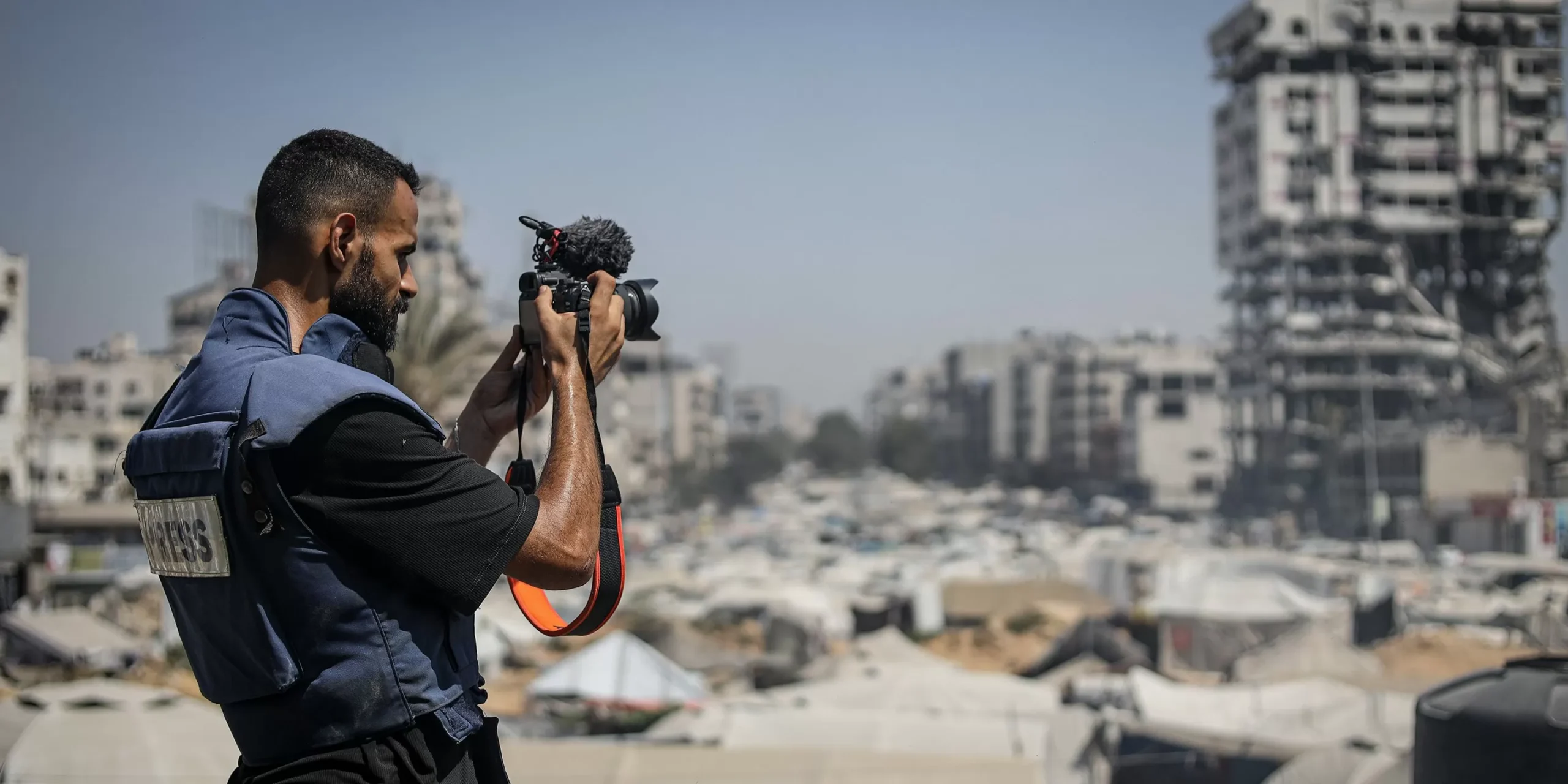
The recent court ruling in the case of journalist Anas Fteiha against German media giant Axel Springer has sparked controversy and raised questions about the freedom of press and the power of media corporations.
Fteiha, a Gaza-based journalist, had filed a case against Axel Springer, accusing them of smearing him as a Hamas propagandist. However, the court rejected his case, stating that he was asked to do something “nearly impossible” to keep it alive.
This decision has left many people wondering about the role of media in shaping public opinion and the extent to which they can be held accountable for their actions.
Fteiha’s case dates back to 2014 when he was working as a freelance journalist for the German newspaper Die Welt. In an article published by the newspaper, Fteiha was accused of being a Hamas propagandist and promoting their agenda through his reporting.
Fteiha, who vehemently denied these allegations, filed a case against Axel Springer, seeking damages for defamation and a public apology. However, the court dismissed his case, stating that he was asked to provide evidence that was “nearly impossible” to obtain.
This ruling has been met with criticism from media watchdogs and human rights organizations, who argue that it sets a dangerous precedent for journalists and their ability to hold powerful media corporations accountable.
The court’s decision to dismiss Fteiha’s case highlights the challenges faced by journalists, especially those working in conflict zones, in seeking justice for defamation and attacks on their credibility. It also raises concerns about the power of media corporations and their ability to influence public opinion.
In a statement following the ruling, Fteiha expressed his disappointment and stated that he will continue to fight for his rights and the rights of other journalists who face similar challenges.
The case has also sparked a debate about the role of media in conflict zones and the need for responsible reporting. In the midst of a conflict, it is crucial for journalists to maintain their objectivity and report the facts accurately, without being influenced by any political agenda.
In recent years, there have been numerous cases of journalists being targeted and attacked for their reporting in conflict zones. It is the responsibility of media corporations to ensure the safety and protection of their journalists, and to support them in their pursuit of truth and justice.
The ruling in Fteiha’s case also highlights the need for stronger laws and regulations to protect journalists and their work. It is essential for governments to recognize the importance of a free and independent press and to provide a safe environment for journalists to carry out their duties without fear of reprisal.
In a world where media corporations hold immense power and influence, it is crucial for them to uphold ethical standards and be accountable for their actions. The court’s decision to dismiss Fteiha’s case may have set a precedent, but it should also serve as a wake-up call for media corporations to be more responsible and transparent in their reporting.
As readers, we also have a responsibility to consume news from credible sources and to question the information presented to us. We must not let ourselves be swayed by sensationalism and propaganda, and instead, demand truthful and unbiased reporting from the media.
In conclusion, the court’s decision to reject Anas Fteiha’s case against Axel Springer has raised important questions about the role of media in society and the need for stronger laws to protect journalists. It is crucial for media corporations to uphold ethical standards and for governments to ensure the safety and protection of journalists. As readers, we must also play our part in demanding truthful and responsible reporting. Only then can we ensure a free and independent press that serves the public interest.