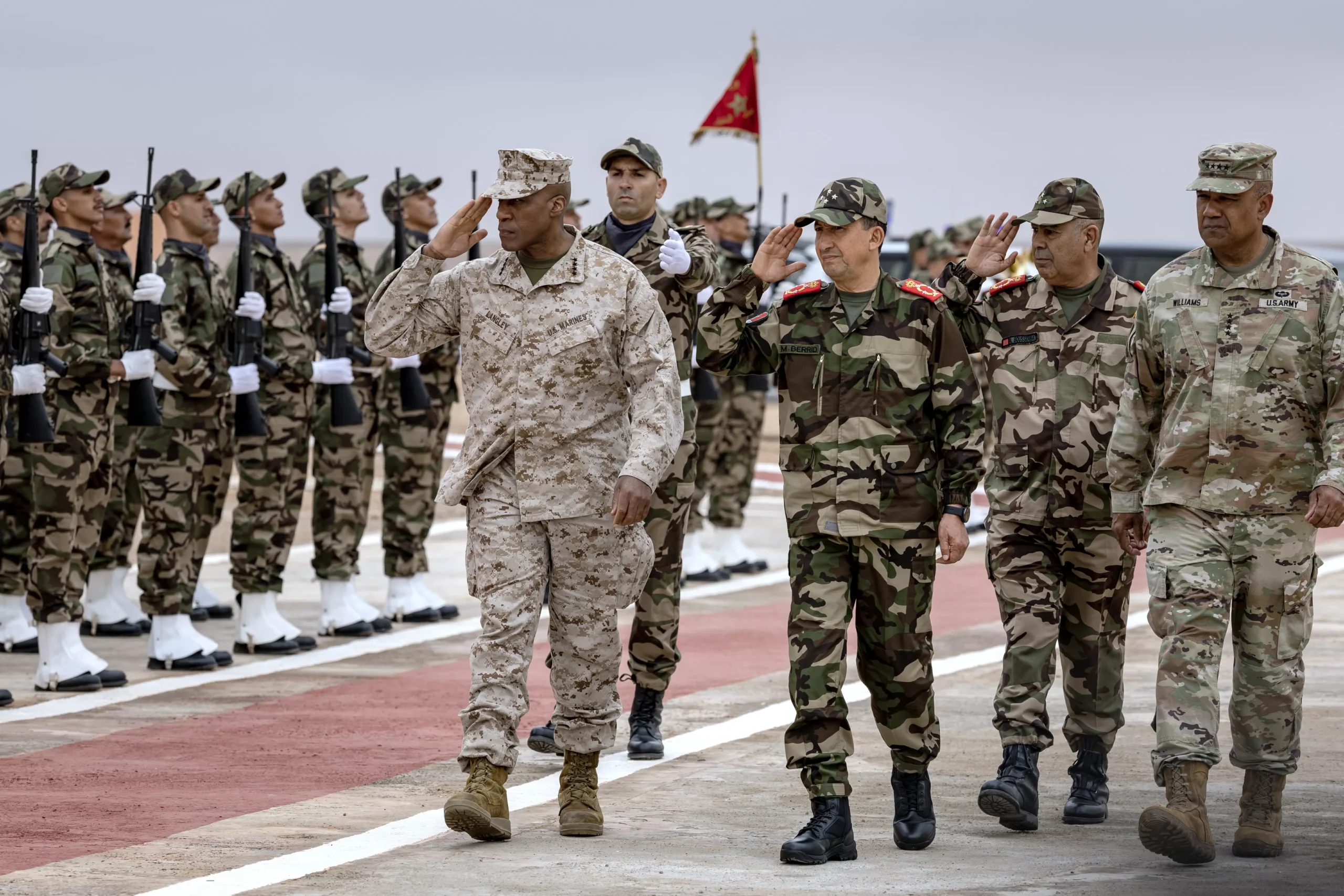
After two decades of failed counterterrorism efforts, the Trump administration is considering closing U.S. Africa Command (AFRICOM). This decision, if implemented, could have significant consequences for the United States’ presence and influence in Africa.
The idea of shutting down AFRICOM has been met with mixed reactions. Some argue that it is long overdue given the lack of success in the region, while others believe it would be a grave mistake that could jeopardize U.S. national security interests.
The top U.S. general in Africa, General Stephen Townsend, recently painted a grim picture of the U.S. military’s failures in the continent. In an interview with The Intercept, he acknowledged that the U.S. has not achieved its goals in Africa and that the current approach is not working.
Townsend highlighted the challenges faced by AFRICOM, including the vastness of the continent, the lack of resources, and the complex political and cultural landscape. He also acknowledged that the U.S. has not been able to effectively partner with African countries in the fight against terrorism.
This admission by the top U.S. general in Africa is a wake-up call for the Trump administration to reassess its approach to counterterrorism in Africa. It is also an opportunity to learn from past mistakes and come up with a more effective strategy.
AFRICOM was established in 2007 as a response to the increasing threat of terrorism in Africa. However, after more than a decade of operations, it is clear that the U.S. has not been able to achieve its objectives. The rise of extremist groups such as Boko Haram, Al-Shabaab, and ISIS in Africa is evidence of this failure.
One of the major criticisms of AFRICOM is that it has primarily focused on a military approach, ignoring the root causes of terrorism in the region. This has resulted in a heavy reliance on drone strikes and other forms of military intervention, which have often caused civilian casualties and fueled anti-American sentiment.
Moreover, the U.S. has not been able to effectively partner with African countries in the fight against terrorism. Many African governments have been reluctant to work with AFRICOM due to concerns about sovereignty and the negative perception of the U.S. in the region.
As a result, the U.S. has been forced to rely on a small number of African countries, such as Djibouti and Niger, to host its military bases. This has limited the U.S.’s ability to respond to security threats in other parts of the continent.
Closing AFRICOM would be a bold move, but it could also be an opportunity to reset the U.S.’s approach to counterterrorism in Africa. Instead of relying solely on military intervention, the U.S. should focus on addressing the root causes of terrorism, such as poverty, corruption, and political instability.
This could involve increasing economic and development assistance to African countries, as well as promoting good governance and human rights. By addressing these underlying issues, the U.S. could help create a more stable and prosperous Africa, which would ultimately contribute to global security.
Closing AFRICOM could also lead to a more collaborative approach with African countries. Instead of imposing its military presence on the continent, the U.S. could work with African governments and regional organizations to develop a joint strategy to combat terrorism.
This would not only improve the U.S.’s image in Africa but also strengthen its partnerships and influence in the region. It would also allow for a more coordinated and effective response to security threats.
Of course, closing AFRICOM would not be without its challenges. It would require careful planning and coordination to ensure a smooth transition and prevent any security vacuums. It would also require a commitment from the U.S. to continue supporting African countries in their fight against terrorism.
However, the potential benefits of closing AFRICOM outweigh the challenges. It would signal a shift towards a more comprehensive and sustainable approach to counterterrorism in Africa. It would also save the U.S. billions of dollars in military spending, which could be redirected towards more pressing domestic issues.
In conclusion, the Trump administration’s consideration of closing AFRICOM is a step in the right direction. It is an opportunity to acknowledge the failures of the past and chart a new course for the U.S.’s engagement in Africa. By addressing the root causes of terrorism and working collaboratively with African countries, the U.S. can help create a more stable and